Why Your Garage Door Bottom Seal Matters on Vancouver Island
A garage door bottom seal does a lot more work than most people think. It is the simple strip along the bottom of your garage door that helps keep out cold air, rain, and unwanted pests, which is especially important in our damp Island climate.
On a typical Vancouver Island summer day, the air can feel warm and pleasant. By evening, cool, damp air often moves in, slipping through the smallest gaps under your garage door. Without a good bottom seal, that air can bring in moisture, smells, and insects. In this article, we will talk about what a garage door bottom seal does, why it matters here on the Island, how to spot problems, and what to do if yours is not doing its job.
How Your Garage Door Bottom Seal Protects Your Home
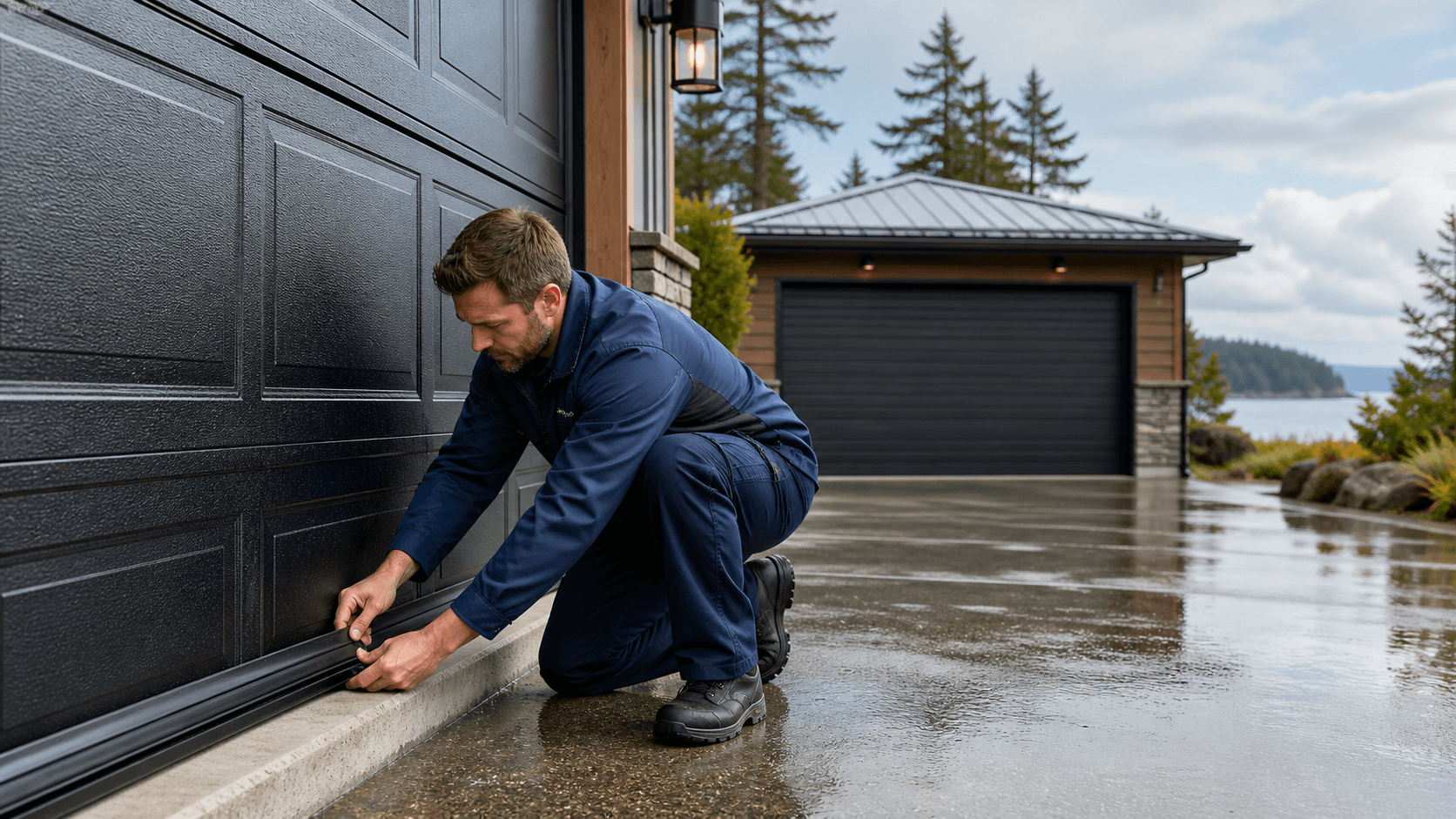
The garage door bottom seal is the strip of flexible material along the bottom edge of your garage door. When the door closes, that strip presses against the floor to create a barrier. Even if your concrete is a bit uneven, the seal helps fill those small gaps.
Its main jobs are simple but important:
- Blocking drafts and outside air from sliding in under the door
- Keeping out water, dirt, leaves, and road grit
- Making it harder for insects and rodents to squeeze into your garage
When the seal is in good shape, it supports comfort in a few ways. Your garage stays drier and less drafty, which helps protect things like tools, sports gear, and storage boxes from dampness and rust. A good seal also cushions the door as it closes. That soft landing reduces shock and can help lower wear on the bottom of the door and other parts of the system over time.
Many homeowners use their garage like an extra room for hobbies, laundry, or a home gym. In those cases, a healthy bottom seal becomes even more important. It helps keep the space more stable in temperature and a bit more separate from the outside air.
Island Weather Versus Your Garage Door Bottom Seal
Vancouver Island is beautiful, but the same coastal weather we enjoy can be tough on garage door bottom seals. The air is often salty and moist, and we get regular rain along with temperature swings between seasons.
Here are a few ways our climate can wear out a seal faster:
- Frequent rain can lead to puddles at the door threshold that sit against the seal
- Damp summer and fall air can encourage mould or mildew in a poorly sealed garage
- Condensation on cool mornings can speed up cracking in older rubber
On sunny days, UV rays can dry out and weaken some types of seal material. Over time, the strip can harden, shrink, or split. Then you add in winter cold snaps, where the seal becomes even less flexible, and the damage can grow quickly.
Because of this mix of moisture, salt, sun, and temperature changes, bottom seals on Vancouver Island often need more regular checks and earlier replacement than in drier areas. Catching problems early can save you from a musty, damp garage when the wetter months roll in.
Common Signs Your Bottom Seal Needs Attention
You do not need special tools to tell if your garage door bottom seal is in trouble. A simple look and a quick feel are usually enough.
Watch for clear visual signs:
- Cracks along the seal or pieces breaking off
- Flat, squished sections that no longer spring back
- Gaps where the seal does not touch the floor
- Spots where you can see daylight under the door
You might also notice performance clues. Maybe you feel a cool draft on your feet when you walk near the door. You might start to see ants, spiders, or even signs of rodents near the bottom corners. Water trails, damp marks, or rust at the bottom of shelves or tools can show that moisture is sneaking in.
Another hint is how your door sounds when it closes. If you hear a sharp bang instead of a soft, cushioned stop, the seal may be too worn or thin to absorb the impact. That can add stress to other parts of the door system and should not be ignored.
Repair, Replace, or Upgrade Your Garage Door Bottom Seal
Once you spot an issue, the question is what to do about it. Sometimes a simple clean and check is enough. Dirt, sand, and small stones can stop the seal from resting flat, which creates tiny gaps. Clearing that debris and checking that the seal is sitting correctly in its track can help if the material itself is still flexible and whole.
In other cases, replacement is the better option. A seal likely needs to be replaced if:
- It is brittle, cracked, or breaking apart
- It has pulled away from the door in places
- It no longer reaches the floor along the full width
There are a few types of seals that work well on Vancouver Island, including standard rubber, heavier vinyl styles, and more advanced weatherstripping systems. Some garages that are prone to puddles or heavy debris at the threshold may benefit from a threshold-style system combined with a new bottom seal.
Choosing the right profile and material for your specific door and floor makes a big difference. Professional installation by someone who works with Island homes every day helps make sure the seal fits properly, follows any slopes or uneven spots in the concrete, and gives you the best possible weather protection.
Simple Summer Maintenance Tips to Extend Seal Life
A little care in mid-summer can keep your garage door bottom seal working longer. You do not have to take anything apart to keep it in better shape.
Here are some easy seasonal tasks:
- Sweep or vacuum dirt, sand, and leaves away from the door line
- Check for small stones or sharp bits caught under the seal
- Wipe the seal gently with a cloth and mild soap and water, then let it dry
Once a year, it helps to do a quick inspection:
- Close the door and look for daylight under it from inside
- Press and bend the seal lightly to see if it is still flexible
- Notice any musty smells or damp corners that might point to leaks
This is also a good time to think about other basic garage door care. A professional can lubricate moving parts, check cables and springs, and make sure the door is running smoothly. When all parts of the system are in good condition, your new or existing bottom seal will work better and last longer.
Take Control of Your Garage Comfort This Season
A well-looked-after garage door bottom seal plays a quiet but important role in your home. On Vancouver Island, it helps keep damp air, rain, and pests where they belong, outside your garage. It also supports comfort, protects stored belongings, and can even help your door system work more smoothly.
If you have noticed drafts, daylight under your door, or more insects and moisture than usual, it might be time to give that seal some attention. A simple inspection and the right repair or upgrade can make a big difference to how your garage feels, in every season. As a local, 5-star-rated team serving homeowners and businesses across Vancouver Island, we understand how our coastal climate treats garage doors, and we are here to help you find the best garage door bottom seal solution for your space.
Protect Your Garage With a Proper Seal Today
If you have noticed drafts, pests, or water creeping in, it is likely time to replace your garage door bottom Seal. At Garage Door Doctor Canada, we carefully assess your door and install the right seal to keep your garage cleaner, drier, and more energy efficient. Reach out to our team today to schedule a convenient service visit or ask any questions about your options, or simply contact us to get started.