Restore Safe, Reliable Garage Door Movement
Extension springs do a big job every time your garage door moves. They help counterbalance the door's weight, so you can open and close it smoothly without putting too much pressure on the opener or other moving parts.
When a spring wears out or breaks, a simple daily entry point can become a safety and security concern. Duncan property owners can spot early warning signs, understand how wet weather affects garage door parts, and know when professional service is the safest choice.
How Extension Springs Balance Your Garage Door
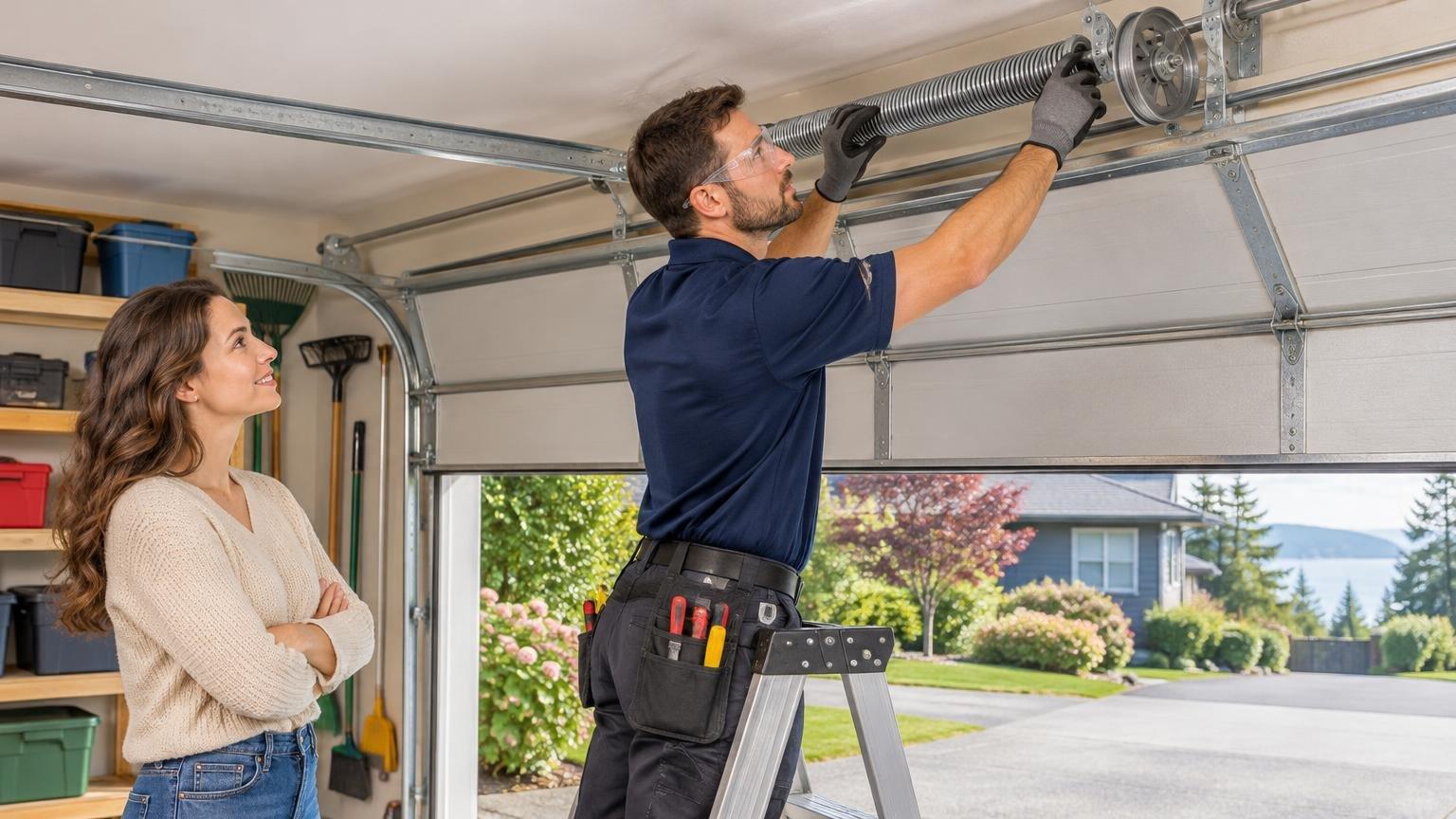
Extension springs are usually mounted along the horizontal tracks on each side of the garage door. As the door closes, the springs stretch and store energy. When you open the door, that stored energy helps lift the door's weight.
A properly working extension spring system helps the door travel evenly along its tracks. It also takes strain off several connected parts, including the opener, cables, rollers, pulleys, and track system. Without the right spring support, the opener may have to work harder than it should, and the door may feel heavy or move in an uneven way.
Because extension springs hold significant tension, they are not a part to handle casually. A damaged spring can release force suddenly, and connected cables or pulleys can also shift when the system is under stress. We recommend having a trained garage door technician inspect, adjust, or replace these parts.
During an inspection, we look at how the spring system works with the rest of the door. A spring may appear intact but still be stretched out, worn down, or no longer properly matched to the door's weight. The goal is not simply to make the door move again. It is to restore balanced, dependable movement across the full opening and closing cycle.
Warning Signs That Call for Extension Spring Repair in Duncan
A garage door usually gives you hints before a spring problem becomes a complete failure. You may notice the door does not move as smoothly as it used to, or that it seems to struggle near the top or bottom of its travel.
Common signs we see include:
- A garage door that feels unusually heavy when opening
- A door that rises unevenly, jerks, or moves in short bursts
- A door that will not open fully or reverses unexpectedly
- Loose cables, damaged pulleys, or a door that sits crooked when closed
- A spring that looks rusted, stretched, separated, or visibly damaged
Not every problem comes from the spring itself. A worn roller, loose cable, track issue, or opener concern can create similar symptoms. That is why a full assessment matters. We check the entire system rather than assuming one part is responsible.
If your door feels heavier than normal, avoid forcing it open with the opener. Continued use can put extra strain on the motor and may cause more damage to cables, rollers, or tracks. Prompt extension spring repair in Duncan can help prevent a small mechanical issue from turning into a stuck door or an unsafe situation.
A door that closes unevenly deserves attention as well. Even if it still reaches the floor, one side may be carrying more weight than the other. That imbalance can affect how the door seals, how the cables sit on their drums or pulleys, and how reliably the opener performs.
Why Rainy Duncan Weather Raises Spring Risks
Duncan's wet late-fall weather can be hard on garage door hardware. Moisture can collect around springs, cables, hinges, rollers, and metal tracks, especially when vehicles bring rainwater into the garage. Over time, damp conditions may contribute to corrosion and make already worn parts less reliable.
Cooler temperatures can also expose issues that were easy to miss during milder weather. Metal parts move differently as temperatures change, and a spring system that is already worn may have a harder time keeping the door balanced. Darker autumn and winter days can mean more trips through the garage, which gives a struggling door more chances to show its problems.
Before winter use becomes routine, we recommend a professional inspection for doors that serve as a main entrance or protect vehicles, tools, and stored belongings. A seasonal check can identify wear before a spring breaks at an inconvenient moment.
Pay attention to changes such as new squeaking, uneven movement, rusty hardware, or a door that hesitates before opening. These signs do not always mean an emergency, but they are good reasons to have the system examined before the weather becomes colder and wetter.
What Professional Extension Spring Repair in Duncan Includes
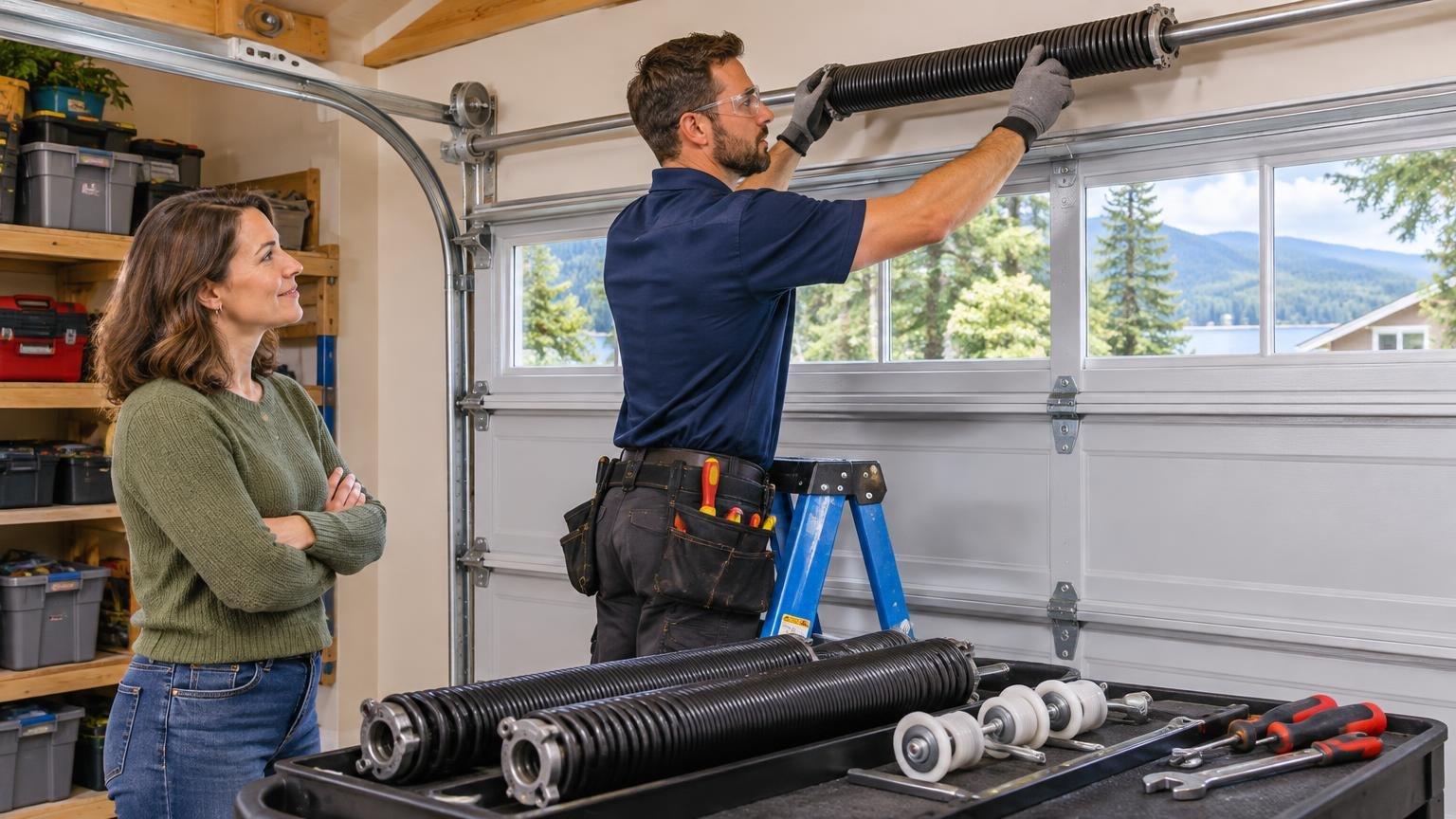
Professional spring repair starts with more than a quick look at the broken or worn part. We assess the condition of the extension springs and check the components that work alongside them. This helps us find the source of the problem and make sure the repaired system operates safely as a whole.
A proper service visit may include checking:
- Spring condition, tension, and placement
- Cable alignment and pulley operation
- Track condition, rollers, and hinges
- Door balance through its full range of movement
- Opener performance after the door is properly balanced
Replacement springs need to be suited to the door's size, weight, and operating needs. Installing an incorrectly rated spring can leave the door too heavy, too light, or unevenly balanced. Our technicians select and install appropriate springs, then test the system to confirm that the door moves smoothly.
Accurate balancing also helps protect the opener. An opener is designed to guide a balanced garage door, not lift all of its weight on its own. Once the spring system is working properly, the opener, cables, and rollers can do their jobs with less unnecessary strain.
Careful assessment and safe handling are important in garage door repairs. Ongoing maintenance awareness can also help you recognize future changes before they affect your daily routine.
Book Expert Service Before a Small Problem Grows
A heavy, crooked, or jerky garage door is not something to push through. Stop using the door if it appears unsafe, avoid pulling on cables or springs, and do not rely on the opener to overcome a balance problem.
The safest next step is a professional inspection of the extension spring system and related hardware. Addressing early wear can help keep the door moving reliably, protect the opener from added strain, and reduce the chance of being left with a door that will not open or close properly.
Restore Reliable Garage Door Operation
Garage Door Doctor Canada can assess your spring system and recommend the right repair before a small issue becomes a major inconvenience. Schedule extension spring repair in Duncan with our experienced team for dependable service and clear guidance. If you have questions or need to arrange an inspection, contact us today.