Stop Coastal Drafts Before They Drain Your Comfort
Garage door weather stripping has a big job. It keeps drafts, rain, and little pests from sneaking in around your door. When it starts to fail, your garage can turn damp, chilly, and musty very quickly, especially in a coastal climate.
On Vancouver Island, summer humidity, cooler nights, and salty air are tough on rubber and vinyl seals. If the weather stripping around your garage door is worn, it quietly lets in air, moisture, and insects. That can mean higher energy use, mould on stored items, and damage to the door and frame.
In this article, we explain how to spot early signs of garage door weather stripping problems before you jump straight to replacement. Careful diagnosis comes first. Many issues can be stopped early with the right inspection and repair, so you are not dealing with big leaks once the fall rains arrive. As a local, family-owned garage door company, we have seen how Island weather treats doors, and we want to help you catch issues while they are still small.
How Coastal Weather Breaks Down Your Garage Door Seals
Living beside the ocean is great, but your garage door seals pay the price. The combination of salt, moisture, and changing temperatures breaks down weather stripping faster than in drier inland areas.
Here is what your weather stripping is up against on Vancouver Island:
- Salt in the air that dries out rubber and vinyl
- Steady moisture from fog, drizzle, and rain
- UV from summer sun beating on the door face
- Day and night temperature swings that make materials expand and contract
Over time, these conditions cause your garage door weather stripping to:
- Dry and harden instead of staying flexible
- Crack or split along the edges
- Shrink or warp so it no longer touches the floor or jambs
- Lose its spring so it no longer compresses to seal gaps
Many Island homes have attached garages or workshops that open right into the main living area. Strata parkades and commercial bays often see constant vehicle traffic. That makes a tight seal even more important for comfort and energy efficiency.
Every time the garage door opens and closes, the bottom seal rubs across concrete. Sand, gravel, and small sticks scrape at the rubber. Side and top seals also flex with door movement. This repeated action wears them out, and in a coastal setting, the wear often starts as:
- Small gaps at the corners
- Slight hardening at the bottom edge
- Just a sliver of light peeking in
Those tiny issues can turn into serious air and water leaks over a single wet season if they are ignored.
Diagnosing Drafts Before Your Energy Bills Spike
Catching drafts early is one of the easiest ways to protect your garage and keep your heating and cooling systems from working too hard. You do not need special tools to notice most problems, just a bit of time and attention.
Simple checks you can try include:
- Stand outside the closed garage door at night with a flashlight. Shine the light around the edges while someone inside looks for beams sneaking through.
- Inside the garage on a breezy evening, slowly move a damp hand along the sides and bottom of the door. Cool air on your skin usually shows a draft.
- Hold a strip of tissue or an incense stick near the seals. If it flutters or the smoke trail tilts, air is moving through a gap.
You can also compare the temperature in the garage to the rest of your home or business. If the garage feels much colder or hotter than nearby rooms, especially when the door has been closed for a while, worn weather stripping may be letting outside air in.
Watch for these red flags around the door perimeter:
- Visible light at the sides, top, or bottom
- Seals that look flattened and do not spring back when pressed
- Edges of the seal that no longer touch the floor or frame
- A bottom seal that looks wavy or twisted in its track
Unnoticed drafts can raise heating use in fall and winter and make air conditioners or dehumidifiers work harder during humid late summer days. It helps to take a few photos of problem spots and check them again after a couple of days. If the same draft keeps showing up, it is usually a sign that the door or the weather stripping needs professional attention before the rainy season returns in full force.
Spotting Early Water Intrusion and Hidden Mold Growth
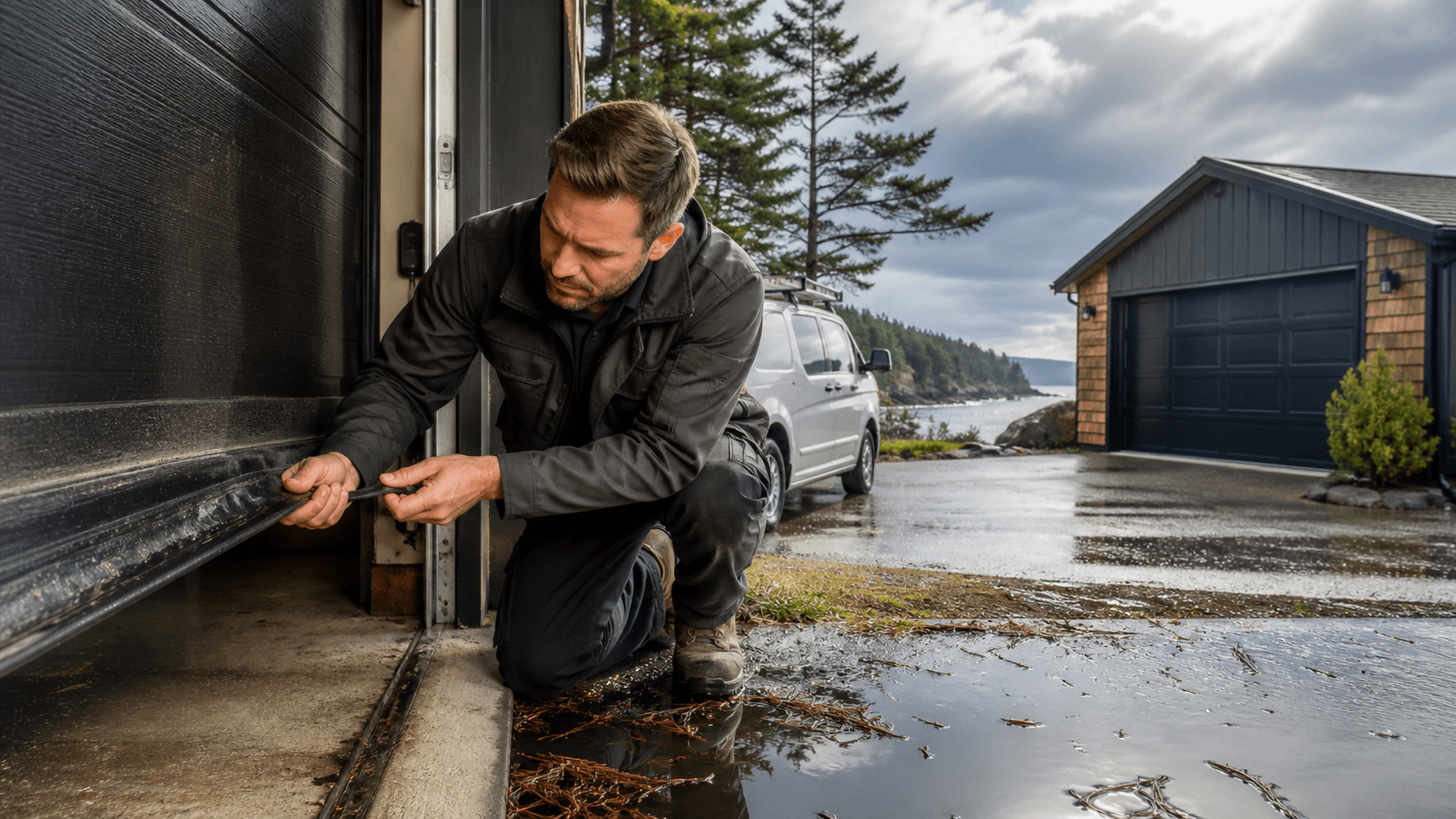
Drafts are frustrating, but water is where the real damage begins. On Vancouver Island, where morning fog and passing showers are common, a small leak at the garage door can stay damp for a long time.
Right after rain or a heavy fog, watch for:
- Thin water trails under the door, especially near the corners
- Damp spots where the concrete meets the wood framing
- Water staining along the base of the walls near the threshold
A slightly misaligned door, paired with worn or flattened seals, lets wind-driven rain be pushed under or around the bottom edge. This is even more common on exposed coastal or hillside properties where wind hits the door directly.
Early clues that moisture is causing damage include:
- Baseboards that are curling or discoloured
- Paint bubbling or peeling near the floor
- Rust forming along the bottom of metal doors
- Swelling, softness, or dark marks in wood trim next to the threshold
In closed or rarely ventilated garages, mould and mildew are a real concern. Pay attention to:
- A musty or earthy odour when you open the door
- Black or green spotting on the lower parts of walls
- Fuzzy growth on cardboard boxes, drywall edges, or wooden shelving stored near the door
Finding where the water is coming in is key. Sometimes the main cause is failing weather stripping. Other times, cracked concrete, a low spot in the slab, or clogged exterior drainage sends water straight toward the door. A professional inspection can separate seal problems from larger structural or grading issues so you fix the right thing first.
When to Repair, Adjust, or Replace Your Weather Stripping
Not every problem around your garage door means full replacement. Some issues can be reduced with adjustments, especially if the seals are still soft and flexible.
Minor problems that might be handled with repair or adjustment include:
- Retainer tracks that have loosened slightly and let the seal twist
- Weather stripping that has shifted out of position but is not cracked
- A door that needs a small alignment tweak so it closes evenly on the floor
On the other hand, it is usually time to replace your garage door weather stripping if you see:
- Rubber that is brittle, chalky, or crumbling to the touch
- Visible splits, tears, or holes along any edge
- Sections that are missing or clearly chewed by rodents
- Flat spots that do not recover shape when you press on them
The type of door and how it is used affects what kind of seal works best. A steel or insulated residential door does not always use the same profile or material as a larger commercial overhead door in a busy industrial space. Choosing the right style helps it seal properly and last longer in our coastal conditions.
For Vancouver Island, a helpful routine is:
- A quick visual check at the end of summer, when seals have dealt with sun and heat
- A more careful inspection before fall storms, watching for gaps and damage
- Another look after the wettest winter months to see how the seals held up
Professional service from a garage door specialist can make these checks safer and more effective. A trained technician can diagnose the real cause of your drafts and leaks, match you with high-quality seals that stand up to local weather, and adjust spring tension, tracks, and opener settings correctly while any work is done on the door. Garage Door Doctor Canada is a family-owned, licensed, and insured company with decades of experience working on residential and commercial doors across the Island, and we understand how quickly our coastal climate can change.
Book a Pro Inspection Before Fall Rains Arrive
If you are not sure how your garage door weather stripping is holding up, a short walk-around this week can tell you a lot. Check for light shining through gaps, feel for drafts in the evening, look for stains or damp spots after rain, and pay attention to any musty odours close to the door.
Catching small issues now helps protect your garage, your stored items, and the rest of your home or business once the heavy rain returns. Regular maintenance and timely repair keep your door sealing properly, your hardware running smoothly, and your space more comfortable all year in Vancouver Island's coastal climate.
Get Started With Your Project Today
Keep your garage comfortable and protected from the elements with expert garage door weather stripping installation and replacement. At Garage Door Doctor Canada, we assess your door, recommend the right materials and ensure a precise fit for long-lasting performance. If you are ready to improve energy efficiency and cut down on drafts, reach out and we will walk you through your options. For quotes, scheduling or questions, simply contact us and our team will be happy to help.