Protect Your Family with a Reliable Safety Sensor
Your photo eyes help protect people, pets, vehicles, and stored belongings in the garage opening. If a child runs through the doorway, a pet follows you outside, or a bicycle is left in the path, the sensors are meant to tell the opener not to close the door.
Late summer in Ladysmith can bring conditions that interfere with this small but important system. Bright August sun may shine into a sensor at certain times of day, while dry dust, pollen, insects, and spider webs can cloud the lenses. Busy garages also tend to collect bikes, garden tools, sports gear, bins, and other items that can interrupt the beam.
At Garage Door Doctor Canada, we provide garage door photo eye repair in Ladysmith for residential and commercial doors. With more than 30 years of experience on Vancouver Island, we inspect the whole system, explain what is happening, and provide upfront pricing and workmanship-backed repairs. When a door cannot close securely, our 24/7 emergency support can help address the issue promptly.
Spot the Signs of Photo Eye Trouble
Photo-eye faults can look a lot like opener, remote, track, or spring trouble. Before anyone adjusts anything, it helps to notice exactly how the door behaves. Some problems come and go, especially when sunlight or a loose wire is involved.
Common warning signs include:
- The door starts closing, then quickly reverses with nothing visible in the opening.
- The sensor indicator lights blink, look dim, or do not light up at all.
- The door closes only while the wall control button is held down.
- The problem happens at certain times of day or after the garage has been used heavily.
Most photo eyes have small LED indicator lights that show whether the sensors are receiving power and seeing each other. Light patterns vary by opener brand and model, so a blinking or unlit light does not always mean the same thing. Still, it often points to alignment trouble, a dirty lens, damaged wiring, power loss, or a failed sensor.
Holding down the wall button can force some openers to close when they detect a photo-eye problem. That behaviour is a warning, not a fix. We do not recommend disabling the sensors or repeatedly forcing the door shut, because the door may no longer respond properly if something enters its path.
Find the Cause Before the Door Stops Closing
Many photo-eye problems have a repairable cause. Dirt, mud, leaves, cobwebs, or a storage item near the track can block the beam. A sensor can also shift out of place after a vehicle brushes the track, a bracket loosens from vibration, or something bumps the unit near the floor.
Ladysmith weather can add another layer to the problem. Summer sun glare may temporarily interfere with the beam, while damp fall days, wind-driven debris, and winter moisture can affect lenses, mounting brackets, low-voltage wires, and electrical connections. Moisture around the bottom of the track area may also lead to corrosion over time.
Some causes are not easy to see from the outside. We often find concerns such as frayed wires, rodent damage, loose terminals, corroded connections, aging sensors, or an opener-related fault. Proper garage door photo eye repair in Ladysmith starts with testing the full safety system, not guessing which part is at fault.
Choose a Safe, Lasting Photo Eye Repair
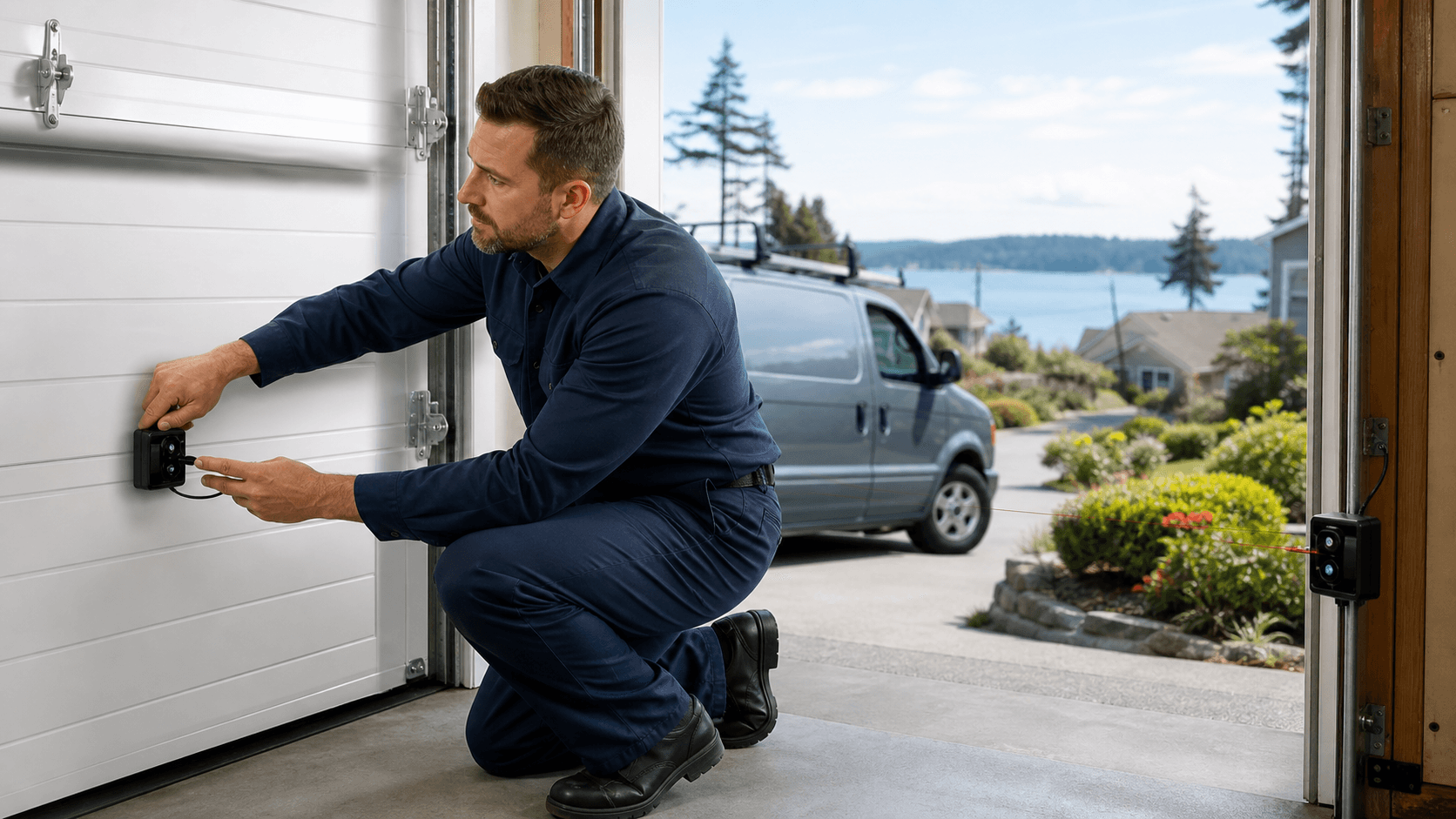
A complete repair involves more than pointing the sensors toward each other and hoping the door closes. Our technicians inspect the sensor lenses, brackets, alignment, wiring, opener settings, and door movement. We also test whether the door responds correctly when the beam is interrupted.
Depending on the cause, the work may include:
- Cleaning and correctly aligning the photo eyes.
- Tightening or repairing loose sensor brackets.
- Repairing damaged low-voltage wiring or connections.
- Replacing faulty sensors with compatible parts.
- Checking the opener and other door components when the sensors are not the only concern.
Replacement photo eyes need to work with the existing opener system. A compatible part, secure mounting, and proper safety testing all matter. We also check the door's movement and balance, because a door with other mechanical concerns can create symptoms that seem like a sensor failure.
Prepare Your Sensors for Wet West Coast Weather
August is a good time to notice small garage door concerns before wetter, darker weather arrives on Vancouver Island. You can look for dirt on the lenses, clutter near the tracks, loose brackets, exposed wires, or water collecting around the sensor area. If anything looks damaged or out of place, leave the wiring and safety system alone until it can be inspected.
Keeping the lower track area clear can prevent simple beam interruptions. Bins, tools, bicycles, and outdoor equipment should stay away from the sensor path, while leaves, cobwebs, and nearby vegetation should not be allowed to collect around the units. This also helps reduce moisture buildup near the sensors.
Annual garage door maintenance gives us an opportunity to test photo eyes, inspect the opener, check hardware and springs, lubricate moving parts, and confirm safety reversal operation. Catching minor wear early can help prevent a frustrating failure during a rainy fall evening or winter storm.
Keep Safety Features Working Properly
A garage door that reverses unexpectedly, has inconsistent sensor lights, will not close, or requires the wall button to be held down should not be forced shut. Keep children, pets, vehicles, and belongings clear of the opening until the cause is understood.
Never bypass, tape over, disconnect, or alter photo eyes to make a door close. Regularly check that the lenses are clean, the beam path is clear, and the door reverses when an object interrupts the sensors. These simple precautions help keep the garage door safety system ready to respond when it matters most.
Restore Reliable Door Operation
If your garage door will not close properly or the sensors show signs of trouble, Garage Door Doctor Canada can help identify the cause and complete dependable garage door photo eye repair in Ladysmith. Our team can assess the system, address damaged or misaligned components, and help restore smooth operation. To arrange service, contact us today.