Quieter Evenings on the Island Start in Your Garage
A loud garage door can ruin a quiet evening faster than almost anything. Early morning shifts, kids napping, neighbours relaxing with the windows open, all of that peace disappears when the door rattles, bangs, and squeals every time it moves. Many Island homeowners think the noise is just part of having an older door, but that is not always true.
One of the most common hidden causes of noise is poor garage door balancing. When the door is not balanced, it gets louder, shakes more, and wears out faster. A properly balanced door runs smoother, sounds quieter, and is safer for everyone in the home. It also helps your opener last longer, since it is not fighting the full weight of the door every time you press the button.
On Vancouver Island, with our damp air and changing seasons, balance can shift slowly over time. Springs relax, metal parts corrode, and the door can go from smooth to shaky without anyone touching it. As a local, licensed, and insured garage door company, we work with these Island conditions every day and see just how much difference proper balancing can make.
What Garage Door Balancing Really Means
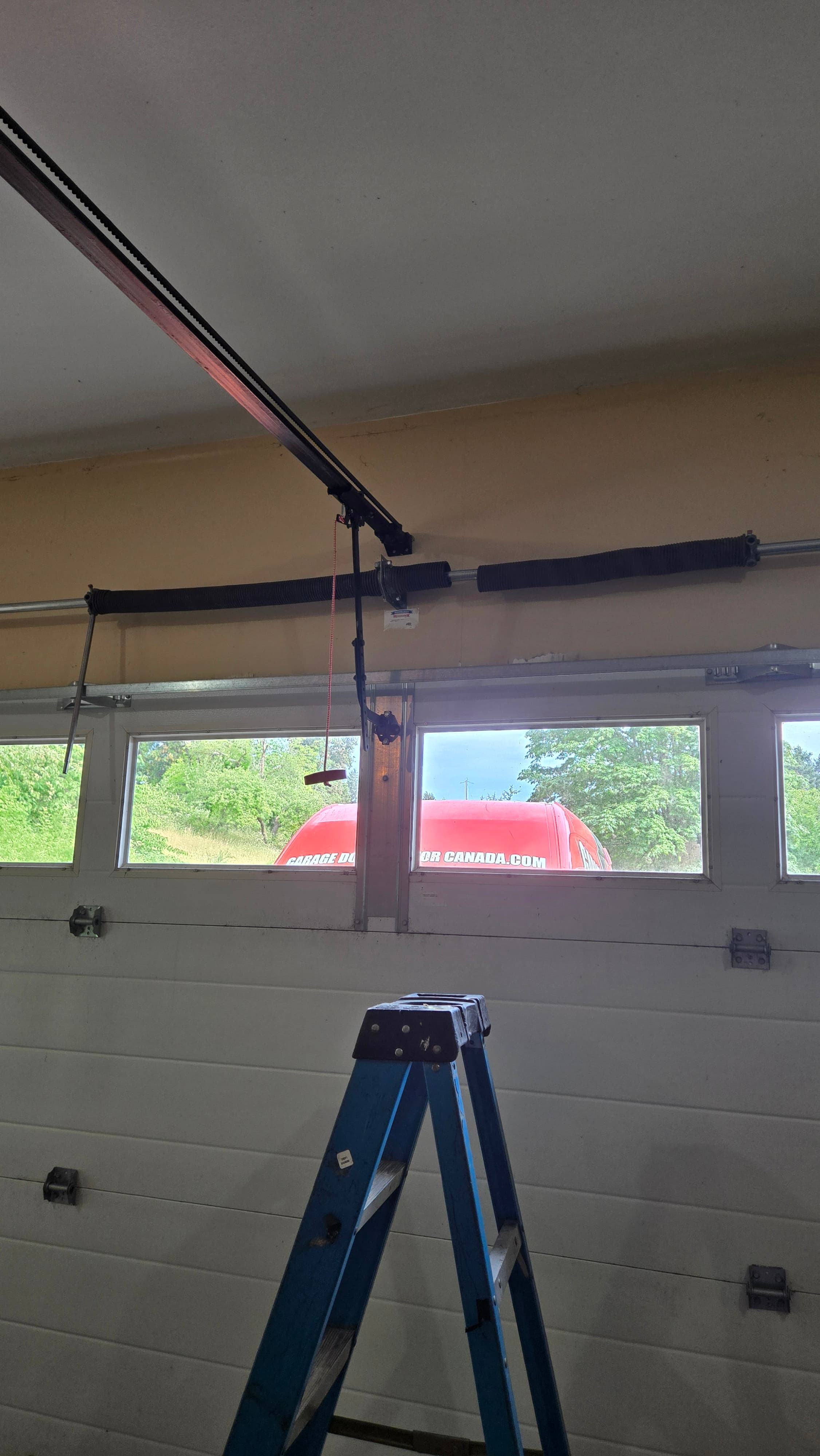
Garage door balancing is simply this: the springs and cables should support the door's weight so that it can stay in place at different points along the track. When a door is balanced, it should not slam down or shoot up on its own. Instead, it should feel almost weightless to lift by hand, even though it is actually very heavy.
The main parts that affect balance are:
- Springs that carry the weight of the door
- Cables that connect the door to the spring system
- Rollers that guide the door along the tracks
- The opener that controls movement but should not be doing the heavy lifting
The opener is often blamed for problems, but it is not meant to pull all the weight. Its job is to guide the door while the springs carry most of the load. When the springs are out of balance, the opener has to work much harder, which usually leads to rough movement and extra noise.
An unbalanced door often:
- Slams shut or drops quickly when closing
- Drifts open or closed when it should stay in place
- Feels heavy or awkward when you try to move it by hand
- Sounds louder, with more groaning, grinding, or clunking
All of this puts extra stress on the whole system and can shorten the life of your opener, springs, and hardware.
Signs Your Door Is Out of Balance
You do not need tools to notice when your garage door is out of balance. In many homes, the door starts to behave differently long before something breaks.
Common signs include:
- The door feels heavier than it used to when opened by hand
- The door rises or lowers unevenly, one side higher than the other
- The door sticks, jerks, or hesitates during travel
- You hear new grinding, banging, or screeching sounds
- The opener seems to struggle or stops randomly
There is also a simple balance awareness check that many homeowners use. With the opener disconnected and the door on manual, a balanced door should stay roughly in place when you lift it halfway. If it shoots up, drops down, or cannot hold its position, the balance is likely off. Because springs are under high tension, we strongly recommend leaving any adjustment to trained technicians.
When a door is badly out of balance, safety becomes a serious concern. A stressed spring is more likely to snap. An overworked opener can fail without warning. A door that drops unexpectedly can damage vehicles, belongings, or even hurt someone walking through. Treating balance issues early helps avoid those sudden failures.
Why Garage Door Balancing Matters on Vancouver Island
Vancouver Island is a beautiful place to live, but our coastal climate is tough on garage doors. Moist air, salt near the shore, and regular rain all affect the metal parts that help keep your door balanced. Springs can rust, cables can fray, and rollers can lose their smooth glide if they are not checked and cared for.
Over time, springs naturally lose some of their tension. When that happens, the door starts to feel heavier. Add in extra weight from wet debris on top of the door, swollen wooden panels, or aging hardware, and your system has to work even harder to move the same door.
Good balancing matters here for more than just safety. It also supports everyday comfort:
- Quieter operation for shift workers coming and going at odd hours
- Less noise around nap time or early mornings in family homes
- A smoother experience in close-knit neighbourhoods where homes are closer together
From a maintenance point of view, a well-balanced door also reduces wear on your opener and other parts. That means fewer sudden breakdowns and fewer rushed service calls during bad weather.
Professional Balancing vs. DIY Adjustments
There are some basic checks that many homeowners feel comfortable doing, such as:
- Looking over the tracks, rollers, and hinges for obvious damage
- Listening for new or unusual sounds during operation
- Keeping the tracks clean and free of debris
- Applying light lubrication to moving parts that are meant to be lubricated
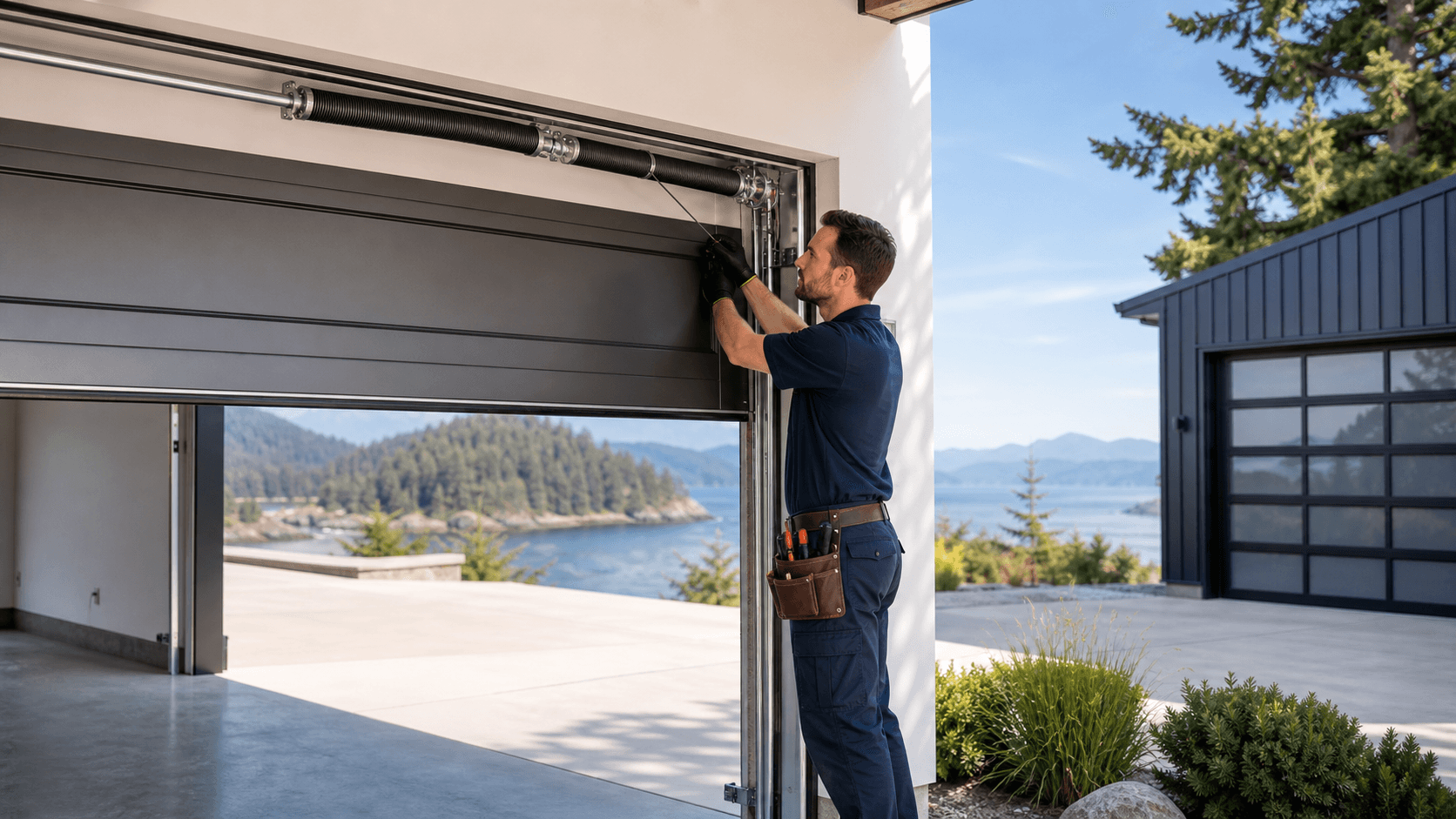
These simple habits can help you spot problems early. However, adjusting springs and cables is a very different job. Torsion springs and high-tension cables store a large amount of energy. If they are handled the wrong way, they can release that energy suddenly, which can cause serious injury.
Professional balancing usually includes:
- A safety inspection of springs, cables, rollers, and hinges
- Tests to check how well the door is supported along its full travel
- Precise spring adjustments to match the exact weight of the door
- Tightening of hardware and small tweaks to reduce noise and vibration
Having a licensed and insured local technician handle this work gives you peace of mind. Someone who works on Island homes every day understands how local brands, materials, and climate all affect balance and performance.
Seasonal Tune-Ups for Quieter Operation Year-Round
Garage door balancing fits well into a regular maintenance routine. Many Island homeowners like to plan a tune-up in the drier months, so things are in good shape before the wetter, cooler season sets in. Warm weather makes it easier to check moving parts and apply lubrication so it can spread nicely.
A typical tune-up often includes:
- A full garage door balancing check
- Lubrication of springs, rollers, and hinges where appropriate
- Inspection of safety sensors and their alignment
- Testing of opener force, travel limits, and auto-reverse features
Taking care of balance and general maintenance before the weather turns can prevent many common cold-season issues, such as:
- Sluggish starts when the door first moves
- Extra strain on the opener on chilly mornings
- Sudden breakdowns when the system is already working harder
With a bit of attention at the right time, your door can stay smoother and quieter through rain, wind, and everything our Island climate brings.
Steps Toward a Quieter Island Home
If your garage door has gotten louder, shakier, or slower over time, balance may be part of the problem. Paying attention to how it sounds and moves over the next few days can tell you a lot. Notice any new clunks, squeals, or jerks in the track, and treat those changes as early warning signs instead of waiting for something to break.
A properly balanced door supports a calmer home, helps protect your family, and gives your opener and hardware a longer working life. For Island homeowners, that means quieter evenings, smoother early starts, and one less source of stress every time the garage door opens and closes.
Restore Safe, Smooth Garage Door Performance Today
If your door is noisy, uneven, or hard to lift, we can pinpoint the problem and fix it before it becomes a costly breakdown. At Garage Door Doctor Canada, our technicians handle precise garage door balancing so your system operates safely and reliably in every season. Reach out and let us assess your door, explain your options clearly, and complete any needed work on your schedule. If you are ready to book a service visit or have questions, simply contact us today.