Spring Cycle Ratings Matter for Ladysmith Garage Door Replacements
A garage door that will not open on a rainy November morning can quickly turn into a safety and access problem. Your vehicle may be trapped inside, the garage may be your main way into the house, and a heavy door should never be forced open. One detail that can help prevent an early breakdown is the cycle rating of your garage door springs.
Every complete opening and closing uses one spring cycle. Springs may look small, but they carry most of the door's weight each time it moves. We help you choose a rating based on how often you use your door, the condition of the system, and how long you want the replacement to serve your household.
Cycle Ratings Predict How Long Springs May Last
A cycle rating is the number of opening-and-closing cycles a spring is designed to handle under suitable conditions. For example, a 10,000-cycle spring is engineered for about 10,000 complete cycles. That rating is a useful estimate, not a promise that every spring will last the exact same amount of time.
At four cycles per day, a 10,000-cycle spring may last roughly six to seven years. A 20,000-cycle spring could potentially last about twice as long under similar use. Higher-cycle options are also available for doors that see frequent daily movement.
Several issues can shorten a spring's working life:
- Corrosion caused by moisture and changing weather
- A door that is out of balance
- Worn rollers, damaged cables, or track concerns
- A spring that does not match the door's weight and setup
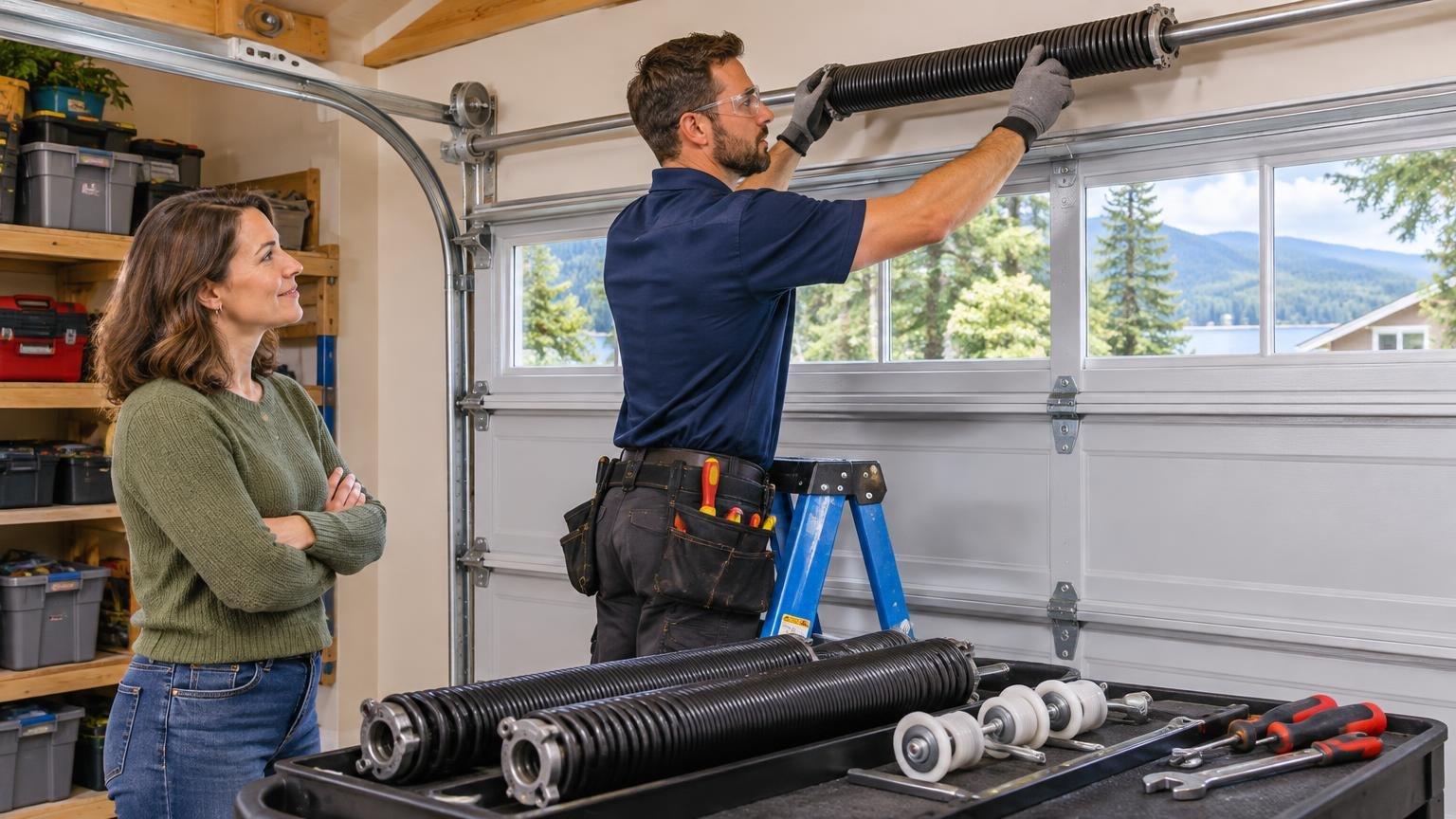
When we inspect a door, we look beyond the broken or worn spring itself. The right spring has to match the door's size, weight, height, and hardware configuration. A strong spring with the wrong specifications is not a good replacement.
Higher Cycle Springs Fit Busy Household Routines
Many people underestimate how often their garage door moves in a normal week. Leaving for work and returning home already creates two cycles. Add another driver, school drop-offs, errands, dog access, or a garage used as the main entrance, and the number rises quickly.
Your daily routine may include more door movement than you realize:
- Two or more drivers coming and going at different times
- Regular school, work, shopping, or activity trips
- Accessing bikes, tools, bins, or stored belongings
- Letting pets in and out through the garage
- Using the garage as your preferred entry to the home
A garage door spring replacement in Ladysmith should account for where your household is headed, not only where it is today. If a teenager may soon be driving, another vehicle is planned, or the garage is becoming a more active storage and entry space, a higher-cycle spring can make sense.
Choosing a longer-cycle option when it suits the door can mean fewer spring replacements over time and less chance of a surprise failure. That extra confidence matters during Ladysmith's wet fall and winter months, when a stuck garage door is especially inconvenient.
Early Warning Signs Prevent Winter Door Disruptions
Springs often fail without much warning, but some doors show signs that their springs are getting tired. A loud bang from inside the garage is one common sign of a torsion spring breaking. You may also notice that the door suddenly feels far heavier than usual or will not move evenly.
Other warning signs we recommend taking seriously include a visible gap in a torsion spring, a door that opens only partway, or an opener that sounds like it is struggling. The opener is designed to guide the door, not lift its full weight without spring support.
Do not attempt to adjust or replace garage door springs yourself. These components are tightly wound and can cause serious injury or further damage to the door when handled without the right tools and training. If your garage stores vehicles, tools, business inventory, or provides a primary entrance, prompt professional attention can prevent a small issue from becoming a major access problem.
Professional Sizing Protects Your Door and Opener
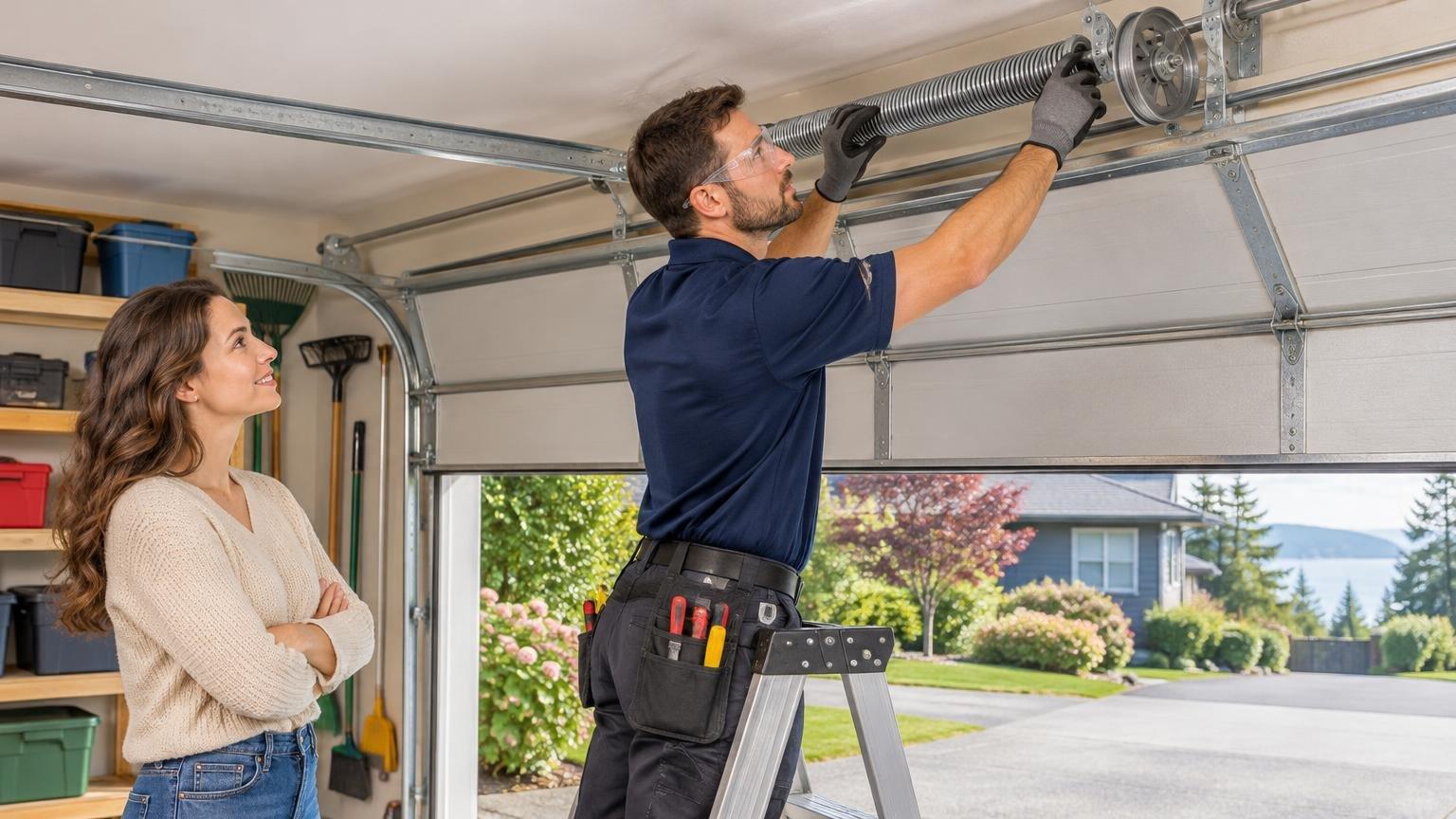
Cycle ratings matter only when the springs are sized correctly. Before recommending a replacement, we assess the door's weight, height, tracks, cable drums, existing spring arrangement, and overall balance. Each of those details affects the type of spring that will safely counterbalance the door.
Properly matched springs also take strain off the opener. When the springs carry their share of the door's weight, the opener does not have to work harder than intended. That can reduce unnecessary stress on the motor and other moving parts.
During a professional inspection, we can also spot related concerns that affect spring life, such as worn rollers, cable wear, loose hardware, or uneven door movement. A replacement works best when it supports the full door system rather than treating the spring as an isolated part.
Schedule a Spring Check Before Winter Arrives
Before winter weather settles in, take note of your garage door's age, daily use, and performance. A door that is noisy, heavy, uneven, or slow to move deserves attention before a spring breaks at the wrong moment.
A professional spring check can help you understand whether your current setup fits your household routine and whether a higher-cycle replacement is worth considering. The safest approach is to address worn springs early, while the door can still be assessed, balanced, and serviced under controlled conditions.
Restore Reliable Door Performance
Garage Door Doctor Canada can assess your door's spring requirements and recommend a replacement suited to its daily use. For dependable garage door spring replacement in Ladysmith, our team can help restore safe, balanced operation. Contact us to arrange a professional service appointment.