Start Fall with a Safer, More Reliable Garage Door
Autumn in Duncan brings rain, cooler mornings, and busier daily routines. As school, work, errands, and weekend plans pick up, your garage door may get more use than it did during summer. That is often when hidden spring problems become harder to ignore.
Garage door springs carry most of the door's weight, helping it open and close smoothly. When a spring begins to fail, you may hear a loud bang, notice the door sitting crookedly, or find that the opener sounds strained. The choice between torsion and extension springs affects safety, reliability, maintenance, and the workload placed on your opener.
Both spring systems can work well when correctly installed, but torsion systems are often recommended for Duncan homeowners who want more controlled, dependable operation.
How Garage Door Springs Carry the Weight
Both torsion and extension springs do the same basic job: they counterbalance your garage door so you do not have to lift its full weight by hand, and so the opener is not doing all the heavy work. Both systems hold a great deal of stored energy, which is why we never recommend adjusting or replacing springs without trained service and proper tools.
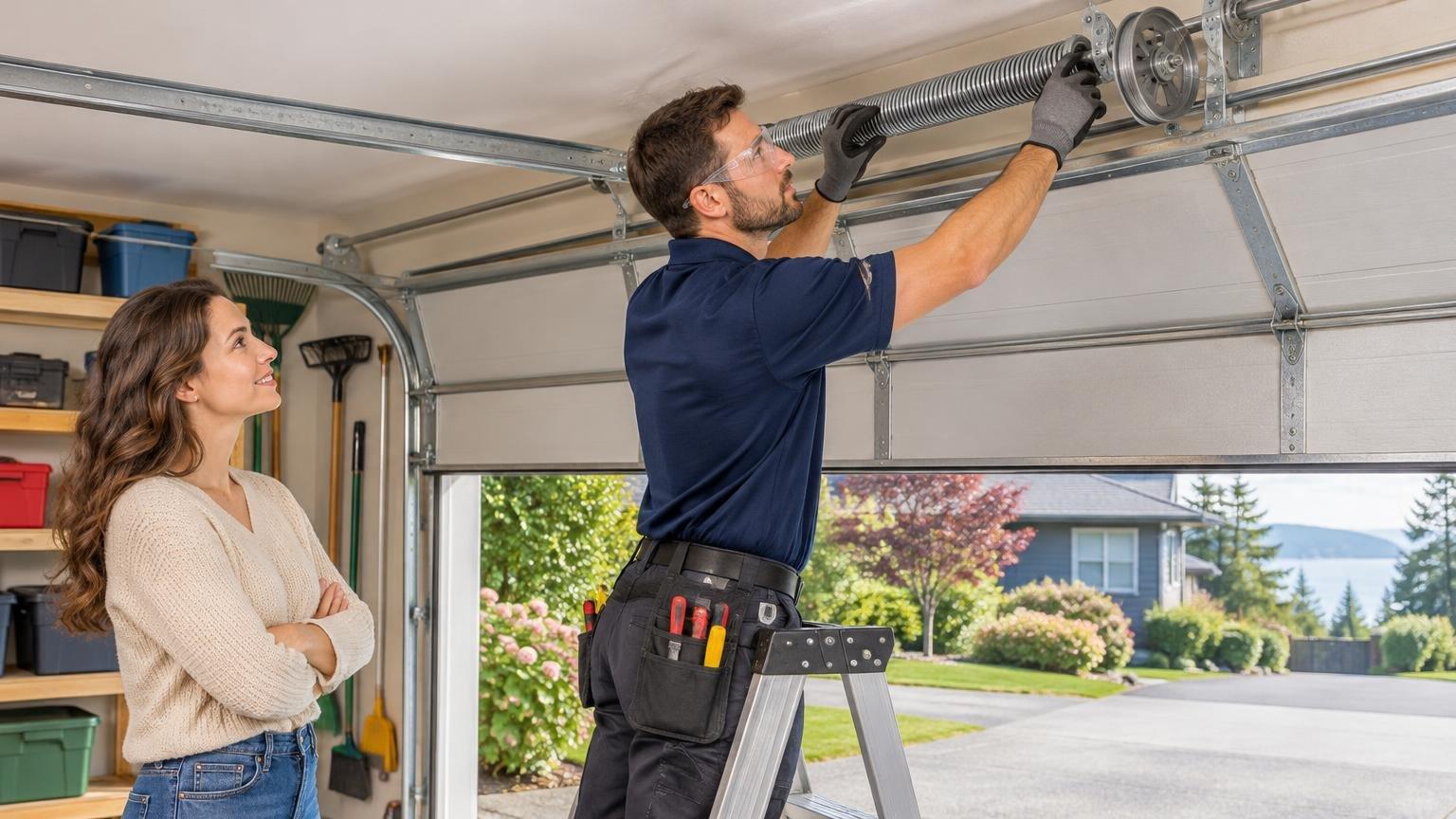
Above the garage door opening, torsion springs sit on a metal shaft. When the door closes, the springs twist and store energy. When the door opens, that energy helps lift the door in a balanced, controlled motion.
For torsion spring replacement in Duncan, careful measurements and correct sizing are required. We assess the door's weight, height, track setup, and hardware so the spring system matches the door it needs to lift.
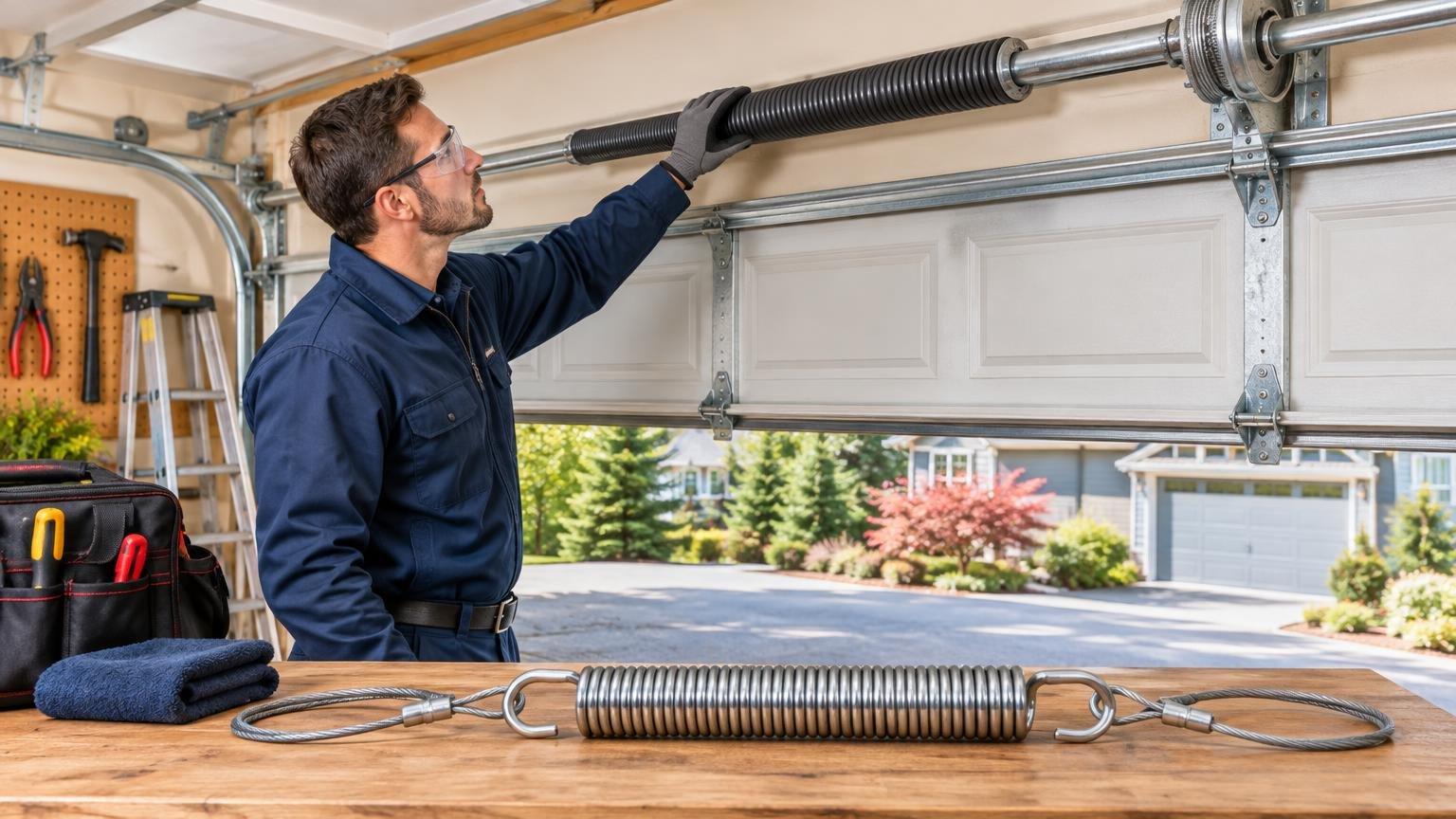
Extension springs work differently. They are installed along the horizontal tracks on both sides of the garage door. As the door closes, the springs stretch. As it opens, they contract and help pull the door upward.
The main difference comes down to how lifting force is delivered:
- Torsion springs distribute force through a central shaft above the door.
- Extension springs pull from both sides along the horizontal tracks.
- Torsion systems generally provide a more even lifting motion.
- Extension systems can suit lighter doors or garages with limited headroom.
Why Torsion Springs Are Often Safer
A torsion spring is mounted on a shaft, which can help limit uncontrolled movement if the spring breaks. A broken spring is still a serious issue that needs professional attention, but the shaft helps keep the system more contained than a loose extension spring.
Extension springs need properly fitted safety cables. These cables run through the centre of each spring and help restrain it if it breaks. Without them, a failed extension spring can move suddenly through the garage and damage property or cause injury.
For households with extension springs, we recommend regular professional inspections, especially before Duncan's wetter fall and winter weather. More frequent door use can place added stress on worn parts, cables, rollers, and opener components.
A properly balanced torsion system can also support smoother door movement. That can mean less vibration, fewer uneven lifting issues, and more predictable travel for the opener. This matters for heavier insulated doors, double garage doors, and doors that open and close several times each day.
Watch for warning signs such as:
- A visible gap in a torsion spring
- Extension springs that look stretched, damaged, or uneven
- Frayed or loose-looking cables
- A door that lifts unevenly or will not open
- Sudden loud noises, grinding, rattling, or shaking
These are not repairs to handle yourself. Springs can release stored energy without warning, and a small mistake can lead to serious injury or damage.
Choosing the Right System for Your Garage
The right spring system depends on much more than the type already installed. When we assess a garage door, we look at its size, weight, material, insulation, daily use, track layout, available headroom, and opener compatibility. An incorrectly sized spring can lead to poor balance, faster wear, and unnecessary strain on other parts of the system.
Torsion springs are often a strong choice for standard, oversized, and heavier residential doors because they provide controlled lifting power. They can also work well for commercial doors that see frequent use. If you are planning a new garage door installation, spring type is worth discussing before the door is installed.
Still, extension springs may be practical in some existing garages where ceiling clearance limits a torsion setup. When extension springs remain in place, safety cables, regular inspections, and prompt attention to visible wear are especially important.
An on-site assessment should begin torsion spring replacement in Duncan. We inspect more than the spring itself, including cables, drums, bearings, tracks, rollers, and opener settings. Looking at the full system helps us identify concerns that could cause another breakdown soon after a spring replacement.
Fall Maintenance for Springs and Openers
Duncan's fall weather can bring moisture, dirt, leaves, and temperature changes that affect garage door parts. Debris may collect around tracks, weatherstripping, and drainage areas near the door. A seasonal inspection can help spot wear before it becomes a stuck door during a cold, wet day.
You can safely look over the door for visible concerns without touching or adjusting spring hardware. Check for rust, bent tracks, worn weatherstripping, damaged rollers, loose-looking cables, and changes in how the door moves. Pay attention to new squeaks, grinding sounds, or a door that suddenly feels heavier than usual.
A door that stops midway, slams shut, pulls to one side, or struggles to open may have a spring, cable, or balance concern. Continuing to use it can put added strain on the opener. Professional maintenance can include approved lubrication, hardware checks, photo-eye alignment, opener inspection, weather seal assessment, and a close review of the spring system.
Reliable Spring Care Before Wet Weather Arrives
A safe garage door starts with the right spring system, proper installation, and ongoing professional care. Torsion springs are often the safer choice for many Duncan garages, while extension systems need the right safety hardware and regular attention to remain dependable.
When unusual noises, uneven movement, visible wear, or balance problems appear, early service can help protect the door, opener, and people using the garage.
Restore Safe, Reliable Garage Door Operation
Garage Door Doctor Canada can assess your spring system and recommend the right repair for your door's weight and setup. For dependable torsion spring replacement in Duncan, our team is ready to help. Contact us to arrange service at a convenient time.