Keep Your Business Moving Through Ladysmith Rain
A commercial overhead door in Ladysmith has a big job during fall and winter. It helps keep rain, wind, leaves, and cold air out while employees, deliveries, customers, and equipment move in and out of your building. When the weather turns wet, a small door issue can quickly affect your workday.
Heavy rain and wind-driven moisture can reach loading bays, warehouse entrances, service shops, storage areas, and other busy facilities. Pooling water, rusting hardware, worn seals, and a door that will not close properly can put inventory and people at risk. We help businesses prepare commercial doors for changing coastal weather through maintenance, repairs, installations, opener service, and 24/7 emergency repairs.
Assess Your Door Before Frequent Rain Arrives
A pre-season inspection gives you time to spot wear before wet weather puts added strain on your overhead door system. Cooler temperatures and moisture can make already worn moving parts slower, noisier, or less reliable.
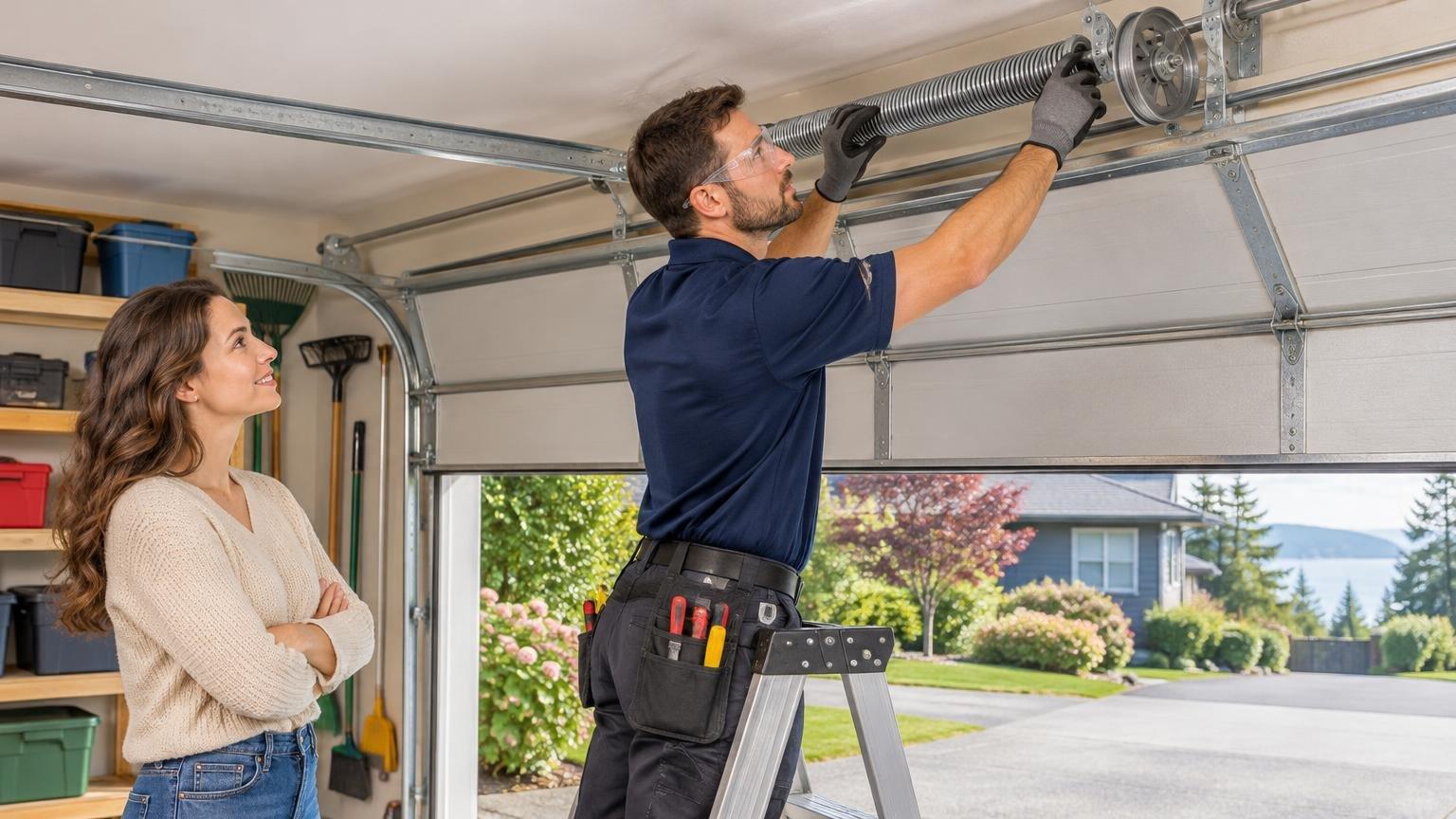
During an inspection, we look closely at the door and the parts that support safe daily operation. Areas that deserve attention include:
- Door panels, tracks, rollers, hinges, cables, springs, and mounting hardware
- Rust, loose fasteners, cracks, bent tracks, or signs of unusual wear
- Jerking, shaking, scraping noises, slow movement, or incomplete closing
- The door's contact with the floor and frame when fully closed
A door should sit evenly against the floor. Gaps along the bottom or sides can allow rainwater, leaves, pests, and cold air into your facility. What starts as a draft or a small puddle can become a slippery entry, damaged stock, or an interruption during a busy shift.
Some concerns are easy to notice, but others are not visible during a quick walk-around. We recommend professional maintenance before the wettest part of the season, especially for doors that open and close often throughout the day.
Stop Water at Seals, Thresholds, and Drains
Your door system is only as weather-resistant as the seals and drainage around it. In Ladysmith, prolonged rainfall can expose weak spots around a loading entrance quickly. Water does not need a large opening to get inside, particularly when wind pushes rain against the building.
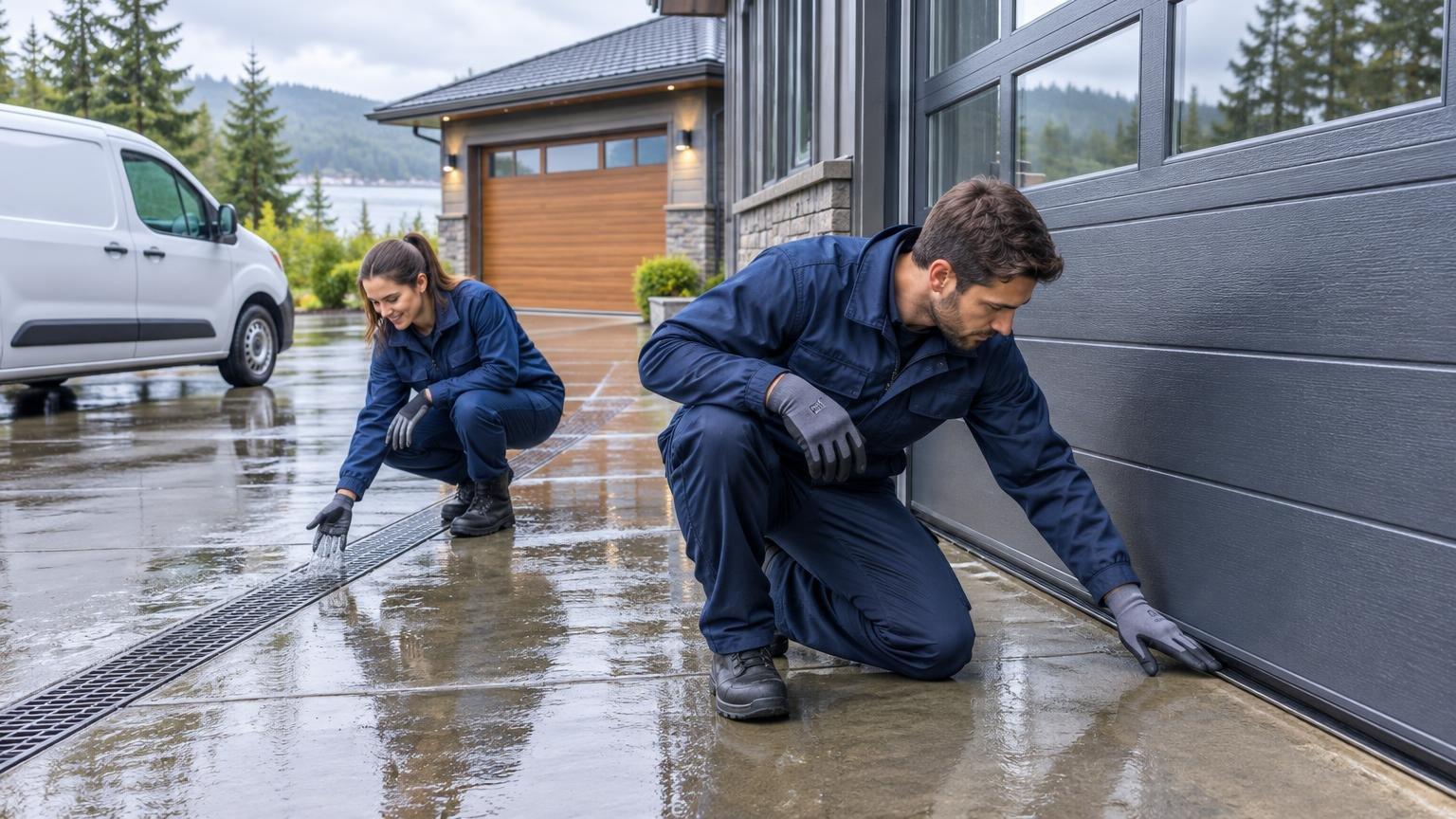
Bottom weather seals should be checked for flattening, splitting, hardening, or missing pieces. A damaged bottom seal can let water into loading areas and create a slip hazard near the entrance. Side and top weatherstripping also need to make good contact with the frame. Tears, gaps, and loose sections can leave your building exposed to rain and drafts.
The space around the entrance matters just as much as the door itself. Keep an eye on:
- Trench drains, floor drains, gutters, and drainage channels
- Door thresholds where dirt, gravel, leaves, or moss can collect
- Standing water near the opening after rainfall
- Concrete or pavement that slopes toward the building
When water repeatedly runs toward the door, the issue may involve drainage, the threshold, or the grade around the entrance. We can assess the door's condition and help identify practical options for reducing recurring water intrusion.
Protect Operators and Safety Equipment From Moisture
Commercial door operators and electrical components need attention before persistent rain arrives. Moisture near an operator housing, wiring connection, wall control, or exterior switch can lead to inconsistent operation. A door that works one moment and stops the next can delay deliveries and leave an entrance unsecured.
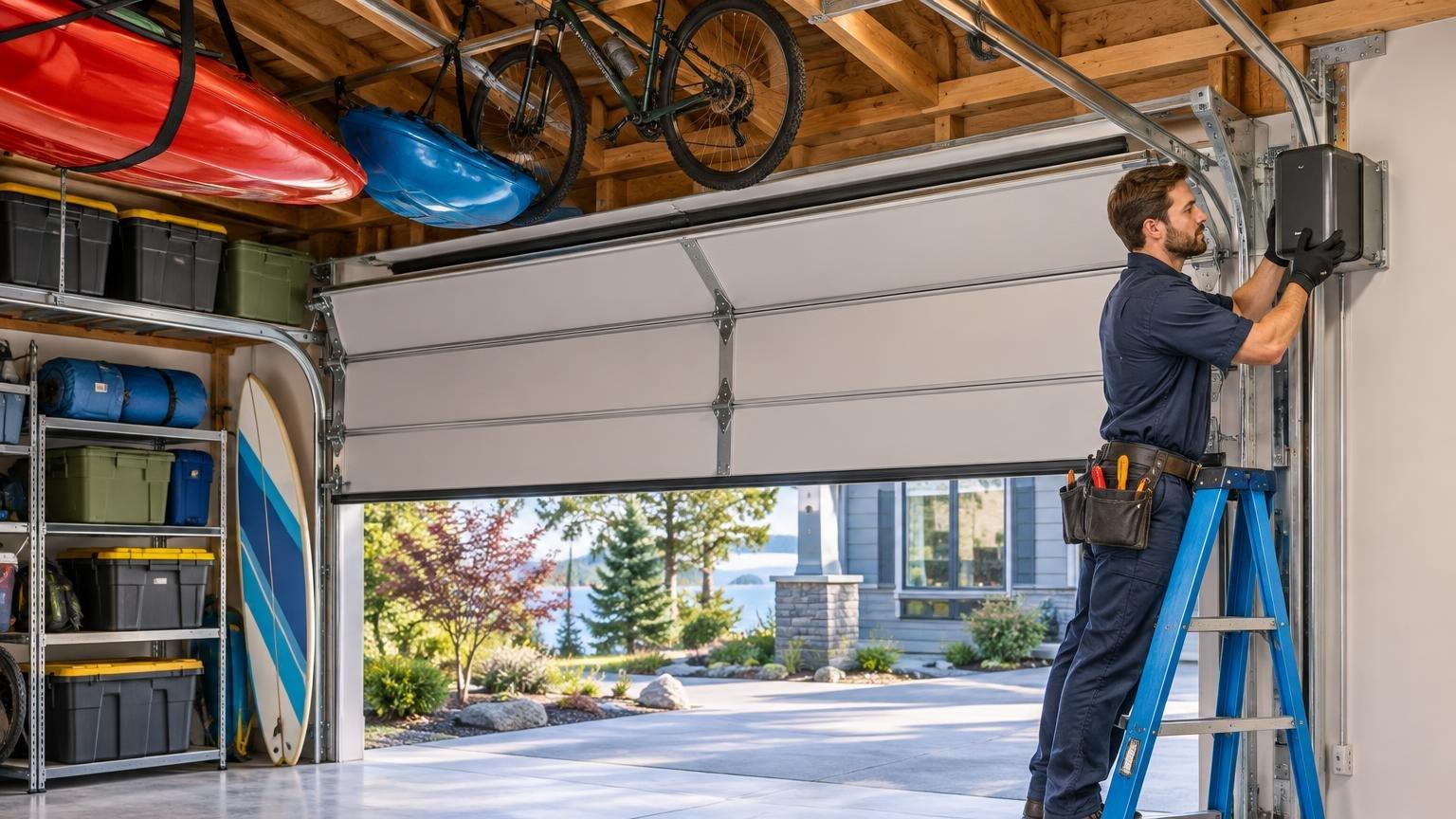
We inspect operator mounting areas for water exposure, corrosion, condensation, and loose connections. Safety equipment also needs regular testing. Photo-eye sensors can become dirty, misaligned, or affected by moisture, which may prevent the door from closing as expected.
Control panels, keypads, exterior switches, and remote-access equipment should be properly protected from direct rain. Damaged covers or exposed components should be addressed promptly by a qualified technician. Electrical door repairs are not a job for staff members or general maintenance workers.
Unfamiliar noises, intermittent operation, breaker trips, or unresponsive controls are all warning signs worth taking seriously. Addressing them early can help prevent a complete door failure during poor weather.
Set a Wet Weather Service Plan for Your Facility
Regular service helps reduce unexpected downtime for high-use commercial doors. Warehouses, automotive facilities, storage buildings, retail service bays, and delivery areas can all benefit from a clear inspection routine during rainy months.
Staff can play an important role by reporting changes right away. Encourage your team to flag water leaks, damaged seals, loud operation, slow opening, uneven movement, and doors that do not close fully. It is also helpful to keep the area around the door clear of standing water, debris, pallets, and equipment that could block drainage or interfere with safe operation.
A professional service visit can include lubrication, hardware tightening, track adjustments, safety testing, seal replacement, and operator checks. For businesses with several doors or frequent daily cycles, ongoing maintenance can make it easier to catch concerns before they interrupt operations.
Prepare Before Storms Create Bigger Problems
Wet-weather preparation is one of the simplest ways to protect your building, equipment, inventory, and staff. A well-maintained commercial overhead door in Ladysmith can help keep water outside, reduce unsafe entry conditions, and support smoother daily operations when rain and wind pick up.
At Garage Door Doctor Canada, we understand the demands that Vancouver Island weather can place on commercial doors. Planned maintenance, timely repairs, replacement doors, opener service, and 24/7 emergency repairs all help businesses address door concerns before small problems become major disruptions. We can help you assess service needs, repair concerns, and replacement options for your facility. Explore our commercial overhead door in Ladysmith services to find the right support for your operation. For scheduling or a service request, contact us today.