Keep Your Ladysmith Garage Door Safe and Reliable
Travel limits and force settings help your garage door open and close safely, but they do very different jobs. When a door stops too soon, reverses without warning, slams down, or sounds like it is working too hard, the problem may involve one of these opener settings. It may also point to a mechanical issue that needs attention.
At Garage Door Doctor Canada, we often see small changes in door movement become bigger problems when they are ignored. August is a good time for Ladysmith property owners to notice uneven movement, noisy rollers, or a sluggish opener before fall rain and winter moisture add more strain. As a locally owned, licensed, and insured Vancouver Island company, we bring more than 30 years of experience to garage door repairs, installations, opener service, spring replacement, and emergency calls.
How Travel Limits and Force Settings Work
Travel limits tell the opener how far the garage door should travel. The down limit tells it where to stop at the floor, while the up limit tells it when to stop at the fully open position. These limits help prevent the door from leaving gaps, pressing too hard into the ground, or travelling too far overhead.
Force settings are different. They tell the opener how much resistance it can handle before it stops or reverses. This is part of the opener's safety system. If the closing force is set too high, the door may keep moving when it meets an obstruction. If it is too low, the door may reverse even though the opening is clear.
Both settings need to work with a door that moves smoothly and is properly balanced. A garage door force adjustment in Ladysmith is not a shortcut for a stubborn door. If the opener is fighting resistance from worn parts or a binding door, raising the force setting can hide the real problem and place more stress on the system.
Signs a Force Adjustment May Be Needed
A force-related issue can make the door seem unpredictable. You may notice that it starts closing, then changes direction before reaching the floor. In other cases, the door may stop halfway down or only close when you hold the wall button.
Common warning signs include:
- The door reverses before it touches the ground
- The opener motor sounds strained or louder than usual
- The door moves more slowly than it once did
- The door pushes hard against the floor before stopping
- The door stops during normal opening or closing
Not every reversal means the force setting is wrong. We also inspect safety sensors, often called photo eyes, because dirty lenses, poor alignment, loose wiring, or an object in the sensor path can stop normal operation. Track obstructions, damaged remotes, and electrical concerns can create similar symptoms.
Modern garage door openers use force settings as one part of their auto-reverse protection. They do not replace working photo eyes or a balanced door. We recommend following your opener manufacturer's instructions for testing the reversal feature with a solid object on the floor beneath the door. If the door does not reverse promptly, changing settings at random can make the situation less safe.
Why Wet Weather Can Expose Travel Limit Problems
A door that leaves a gap along the floor may have a down limit set too high. Even a small opening can allow rain, drafts, pests, and debris into the garage. On the other hand, a door that presses too firmly into the floor may have a down limit set too low, which can strain the opener and wear on the bottom weather seal.
Late-summer checks can be especially helpful in Ladysmith because wetter weather may make existing problems easier to notice. Moisture, dirt, and changing temperatures can affect how rollers, hinges, tracks, and seals perform. Wooden doors may swell, weather stripping can stiffen, and debris can collect near the threshold.
During a professional assessment, we look beyond the opener controls. A proper inspection may include:
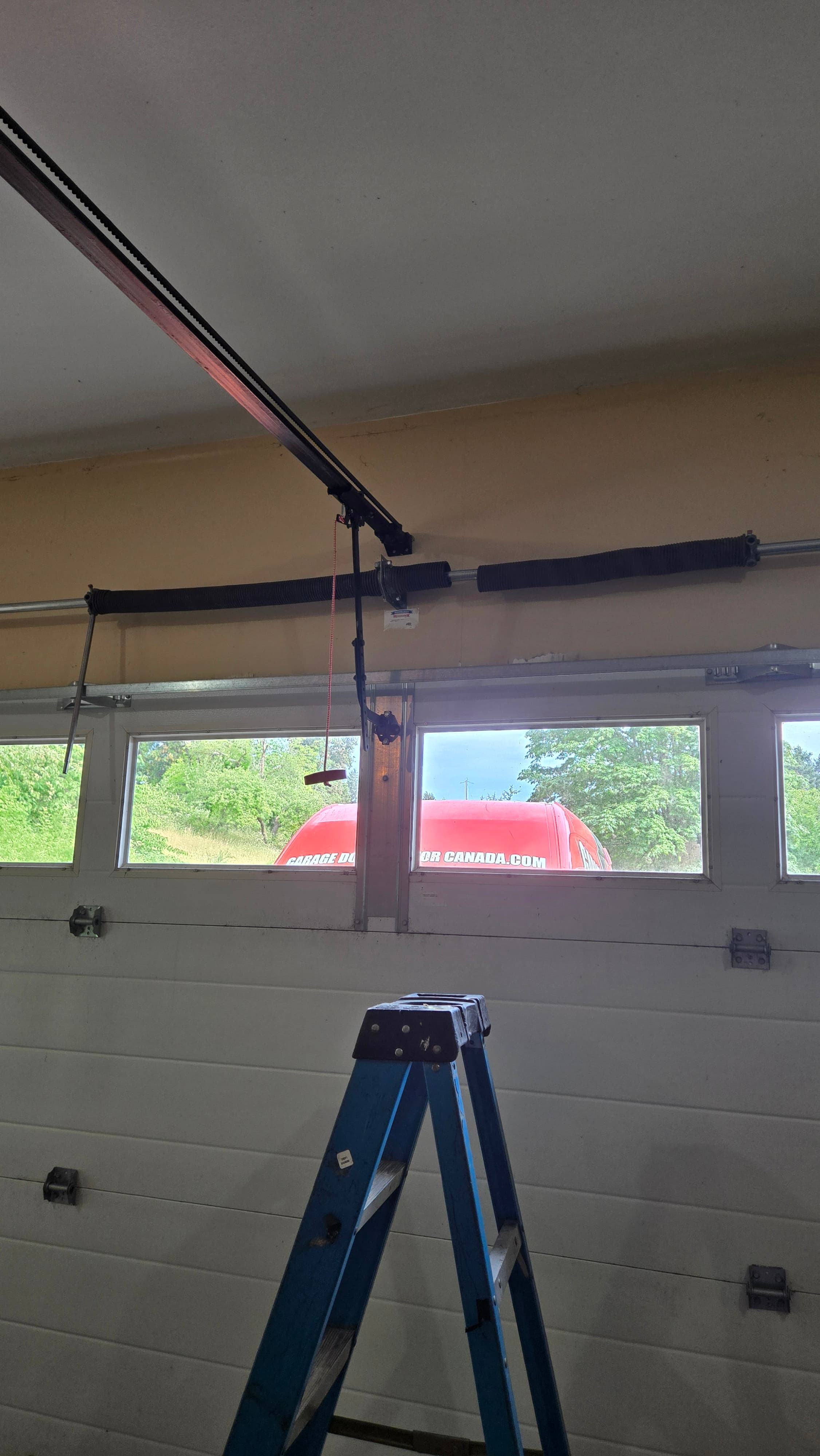
- Door balance and spring tension
- Cable condition and roller wear
- Track alignment and hinge movement
- Safety sensor operation
- Opener response and travel limit performance
If a garage door force adjustment in Ladysmith is needed, we address it after identifying the source of resistance. This helps protect the opener from being asked to do more work than it should.
Address New Garage Door Changes Early
A garage door should move smoothly, close securely, and reverse when its safety system detects resistance. New noises, uneven travel, repeated reversals, or a door that will not close properly can signal worn springs, opener trouble, sensor problems, or track concerns. Early service can help prevent a smaller issue from putting more strain on other parts of the system.
Springs, cables, and opener adjustments involve significant tension and electrical components. We recommend leaving these repairs to trained professionals, especially when a door is binding or out of balance. Our team can determine whether the concern involves travel limits, force settings, or another part of the garage door system for homes and commercial properties throughout Ladysmith and Vancouver Island.
Restore Smooth, Reliable Door Operation
For dependable garage door force adjustment in Ladysmith, Garage Door Doctor Canada can assess your door's performance and recommend the right solution. We provide clear service for residential and commercial garage doors across the area. To book an appointment or discuss your concerns, please contact us.