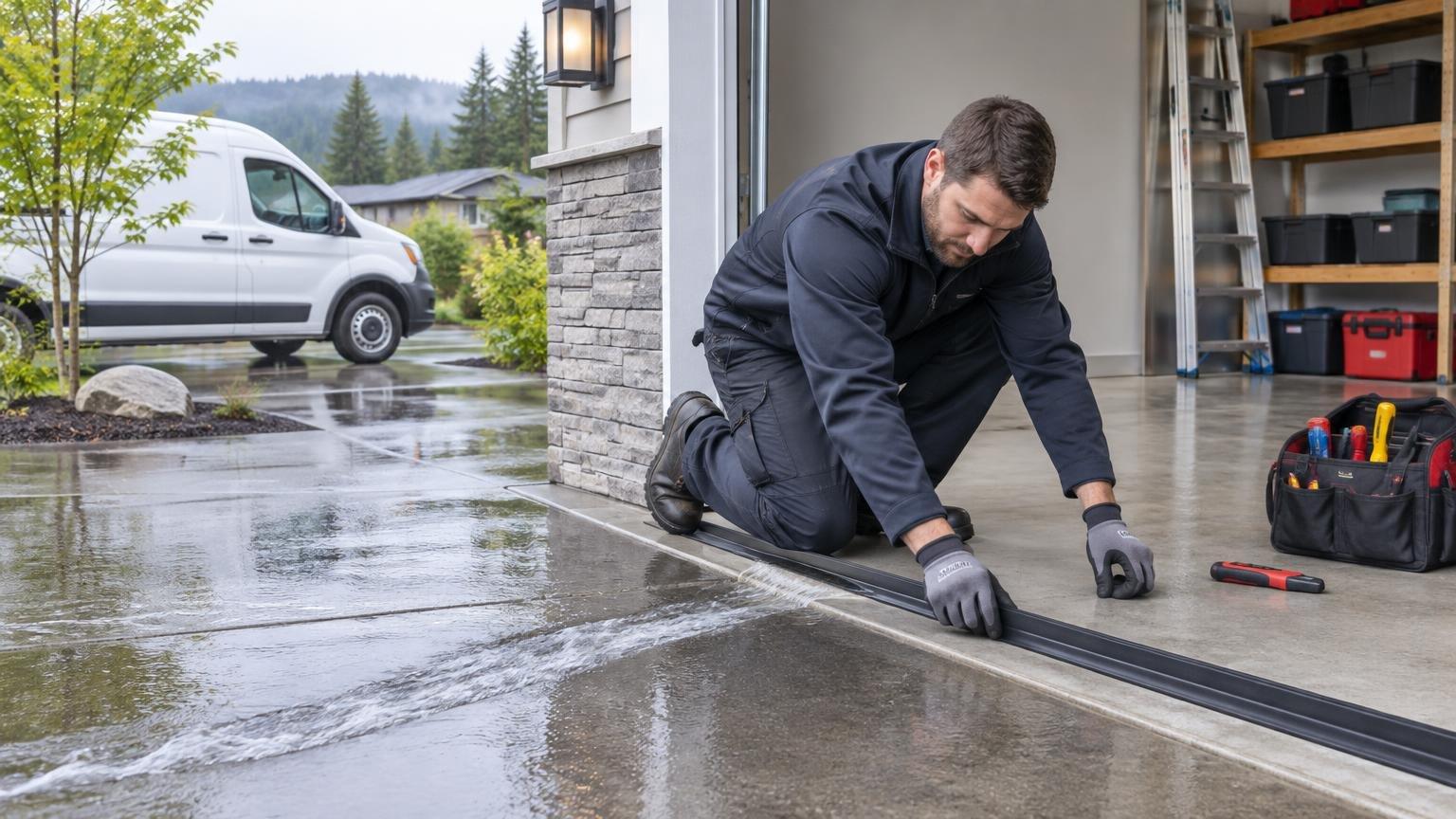
A garage door threshold seal in Duncan can help keep minor driveway runoff outside, but it is not a substitute for proper drainage. When rainwater runs down a sloped driveway, it naturally follows the lowest and easiest route, which can be straight toward your garage opening.
Late October often brings frequent rain, wet leaves, cooler temperatures, and soil that is already holding plenty of moisture. We help property owners throughout Duncan and nearby Vancouver Island communities spot small garage door sealing concerns before wetter winter weather turns them into a larger mess.
Where Driveway Runoff Finds Its Way In
Water entering a garage is not always the garage door's fault. Runoff may come from poor driveway grading, clogged gutters, blocked trench drains, cracked concrete, or a low spot where water gathers against the garage slab.
During or shortly after rainfall, we recommend paying attention to how water moves around your property. A quick observation can reveal whether the concern is minor seepage at the door or a drainage issue that starts farther up the driveway.
Look for signs such as:
- Puddles forming directly in front of the garage door
- Water trails moving toward the garage instead of away from it
- Overflowing gutters or downspouts releasing water near the driveway
- Leaves, mud, or gravel blocking a trench drain
- Dampness along the inside edge of the closed garage door
Older garages may have settled concrete, small cracks, or uneven areas near the opening. These changes can create gaps below the door or direct water toward the building. Water may also enter through worn side weatherstripping, warped door panels, or a door that does not close evenly across the floor.
A small amount of surface water may be manageable with better sealing. Repeated deep pooling, however, usually points to a bigger drainage concern that needs attention outside the garage.
Why a Garage Door Threshold Seal in Duncan Helps
A garage door threshold seal is fitted to the garage floor just inside or at the opening. When the door closes, the bottom weatherstrip presses against the raised seal. Together, these parts create a tighter barrier along the bottom of the door.
This extra contact can help close small gaps caused by minor floor unevenness or slight imperfections in the concrete. For Duncan properties facing rainy weather, a properly selected threshold may help reduce shallow runoff, wind-driven rain, leaves, dust, and small pests entering beneath the door.
A threshold seal can also help keep the garage floor cleaner and reduce slippery wet patches near the entrance. That matters when you use the garage for vehicles, tools, storage, or a work area.
Still, we set realistic expectations with every sealing concern. A threshold seal is meant for small amounts of surface water. It cannot stop flooding, standing water several centimetres deep, or runoff caused by a severely sloped driveway. The best results come when the garage door is aligned properly, the bottom seal is in good condition, and water is being directed away from the opening.
Pair Door Sealing with Better Drainage
The strongest defence against water damage begins outside the garage. Ideally, driveway water should move away from the building instead of collecting at the threshold. Settled concrete, damaged pavement, and low areas can change the path of runoff over time.
Before choosing a threshold seal, it helps to have the driveway surface and drainage pattern assessed. If water is constantly being pushed toward the garage, sealing alone may only change where the water pools.
Seasonal maintenance around the property can also make a difference. We often suggest arranging for these areas to be checked before the wettest part of winter arrives:
- Gutters and downspouts with leaf buildup
- Downspout extensions that discharge too close to the garage
- Trench drains filled with debris, mud, or gravel
- Cracks and low spots in the driveway surface
- Dirt and debris collecting along the garage door opening
If water regularly enters your garage, professional drainage work may be needed to address the source. At the same time, we can inspect the garage door, bottom seal, weatherstripping, track alignment, and threshold area to identify door-related issues that may be adding to the problem.
Choosing a Threshold Seal That Fits Your Garage
Not every garage floor or door opening has the same needs. The right garage door threshold seal in Duncan depends on the door size, the condition of the concrete, the amount of minor runoff you experience, and the regular vehicle traffic passing over the seal.
The floor must be clean, dry, and properly prepared so the threshold can adhere as intended. The seal also needs enough width to provide a reliable contact area when the door closes. A narrow or poorly matched seal may leave water finding its way through another gap.
Door alignment matters just as much as the threshold itself. Worn rollers, damaged tracks, an uneven bottom weatherstrip, or an unbalanced door can prevent the bottom of the door from sitting consistently against the threshold. In that situation, even a good-quality seal may not perform as expected.
We also recommend treating garage sealing as ongoing maintenance, not a one-time fix. Before and after the wet season, inspect for lifting edges, cracked material, debris buildup, or new water paths along the driveway and door opening.
Prepare Your Garage for Wet Winter Weather
A few observations before winter can help you catch moisture concerns early. Check for daylight under the closed garage door, note where rainwater pools after a storm, and look for damp areas along the interior edge of the opening. Damp stored items, slippery floors, mould growth, rusting hardware, damaged drywall, and moisture near electrical equipment can all follow when water gets inside.
Storage placement also matters. Keeping cardboard boxes, electronics, and valuables off the garage floor and away from the door can reduce damage if minor water intrusion occurs. Raised shelving and suitable storage bins are often a safer choice in a garage that has experienced runoff.
Monitor Water Around the Garage Opening
When a door no longer closes evenly or water appears inside the garage, noting the timing and path of the moisture can help identify the likely cause. Worn bottom seals, damaged weatherstripping, alignment concerns, and drainage-related warning signs around the threshold may each contribute to water intrusion.
Addressing small sealing and drainage concerns before heavy rain arrives can help protect the garage, stored belongings, and door system from avoidable moisture damage.
Improve Your Garage's Weather Protection
Garage Door Doctor Canada can assess the condition of your threshold and recommend a practical solution for your door and driveway. Explore our garage door threshold seal in Duncan service to arrange professional help. For questions or to book an appointment, contact us today.