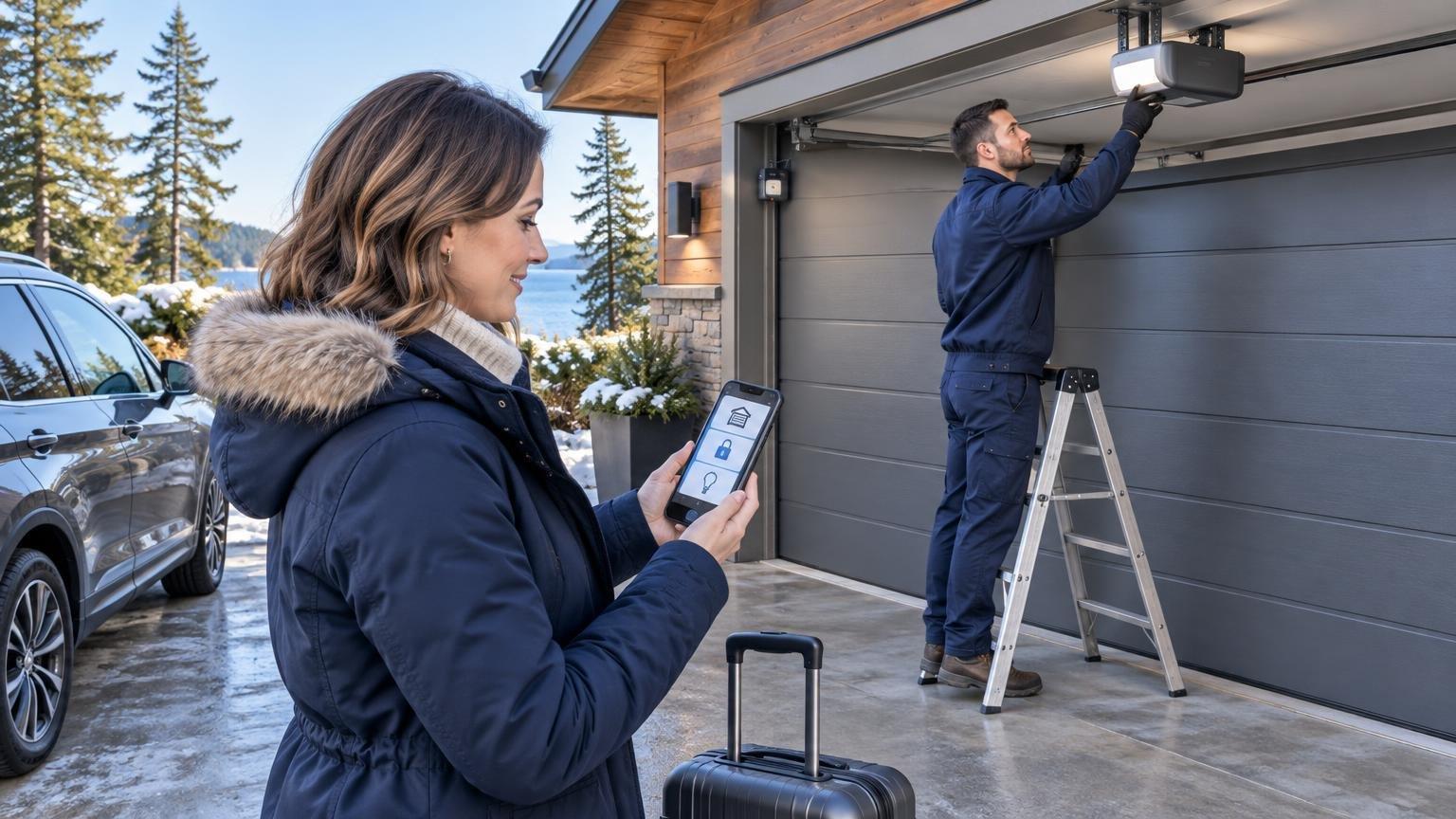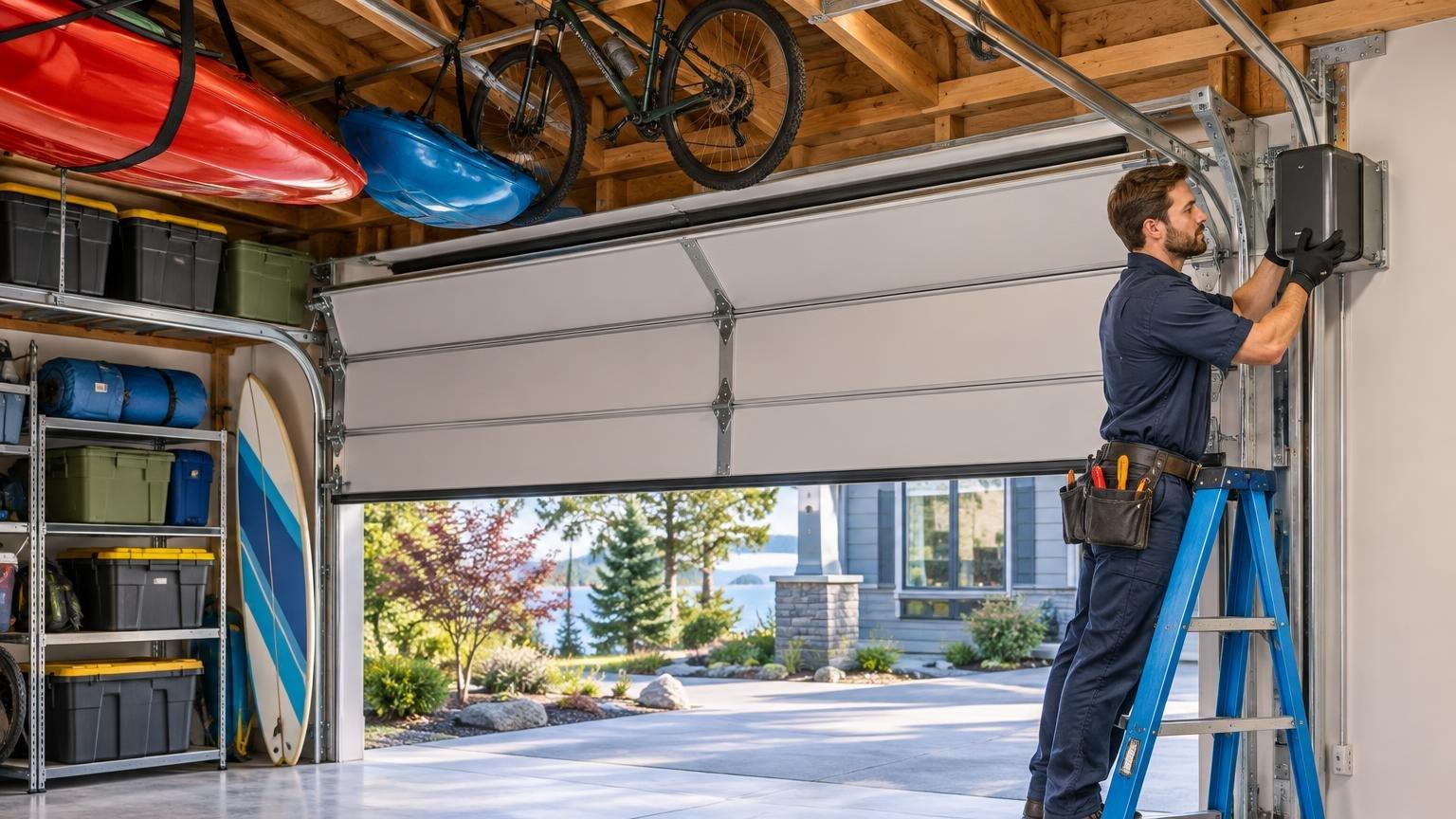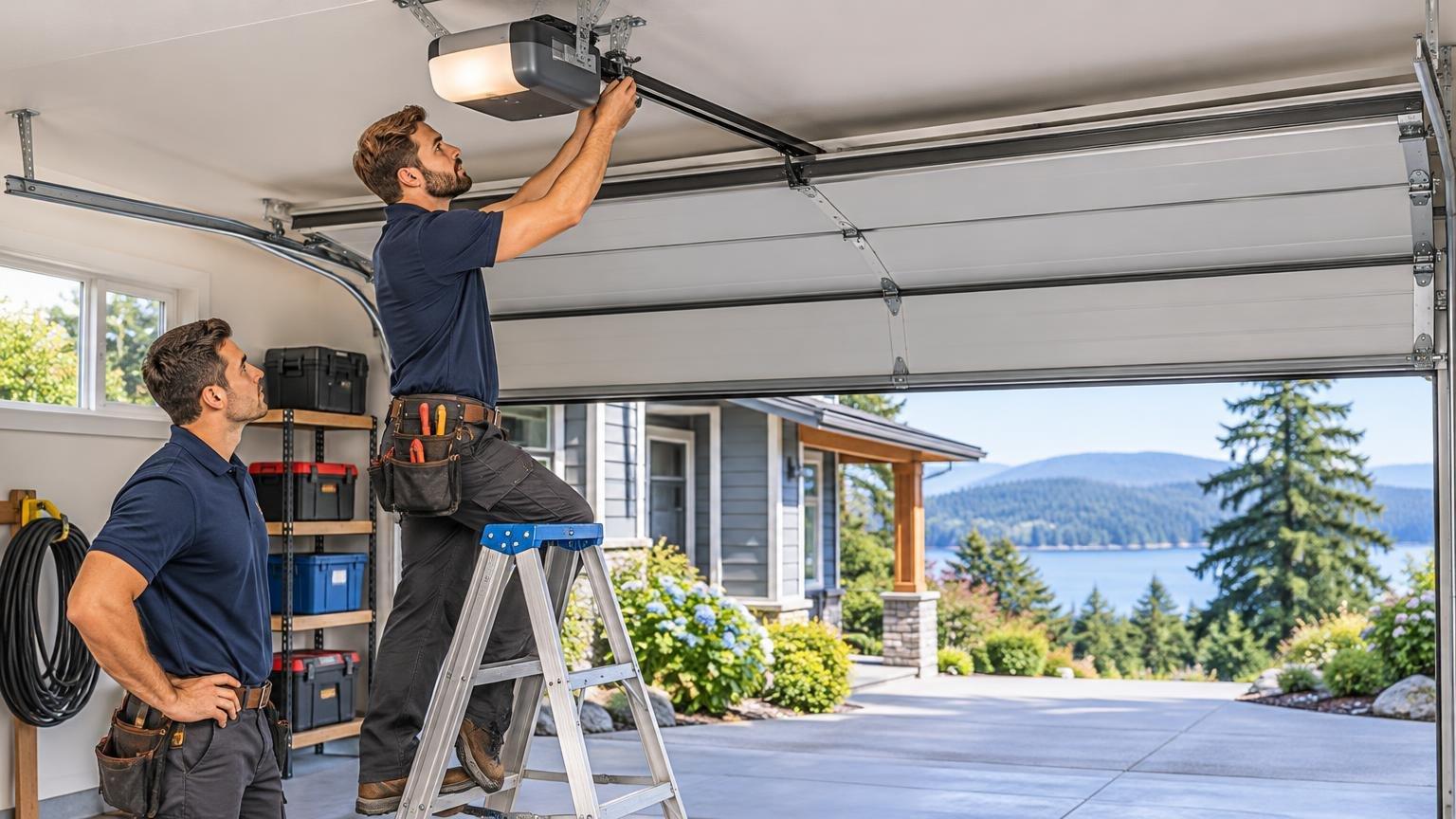
Keep Your Garage Door Moving Safely This Fall
Opener travel settings tell your garage door how far to move before stopping in the fully open and fully closed positions. When those settings are off, the door may stop short, hit the floor too hard, reverse without warning, or fail to open far enough for safe clearance.
September in Ladysmith often brings more rain, cooler temperatures, and leaves or debris around the garage. Those conditions can bring existing door problems to the surface. We service residential and commercial doors, openers, and springs, and provide emergency repairs.
Spot Travel Limit Problems Before They Cause Damage
A door that does not stop where it should deserves attention. Travel-limit trouble can look different from one door to the next, but we often see a few clear warning signs:
- A gap remains between the door and the floor
- The door reverses before it closes completely
- The door presses hard into the ground
- The door opens only partway or stops below the full open position
Still, not every stopping problem is caused by a setting. Misaligned photo-eye sensors, worn rollers, bent tracks, broken springs, and opener motor trouble can create similar symptoms. That is why we recommend avoiding assumptions about a simple garage door travel adjustment in Ladysmith.
When a door closes too forcefully, it can strain the opener and wear out weatherstripping. It may also leave your garage less secure or add stress to cables, rollers, and other moving parts.
Understand Travel Limits and Safety Settings
Travel limits control distance. They tell the opener when to stop during opening and closing. Depending on the model, the settings may be controlled by limit screws, dials, programming buttons, or a digital menu.
Force settings are different. They control how much resistance the opener will tolerate before stopping or reversing. Raising the force setting to "fix" a door that reverses can create a safety concern. The real cause may be a blocked sensor, a binding track, or another issue that needs proper attention.
Your opener's safety reversal system matters just as much as its travel settings. Modern openers should reverse if they meet an obstruction, and they should not close when the photo-eye sensors are blocked or out of alignment. Before wet fall weather settles in, we recommend regular safety checks to make sure these features are responding properly.
Approach Travel Adjustments with Care
Before any opener setting is changed, the full door system should be checked. Clear away leaves, dirt, or stored items near the tracks and door path. The photo-eye sensors should be clean, aligned, and free from obstruction.
For a properly working door, adjustments must be small and followed by a complete open-and-close test. The goal is a door that reaches the floor gently, forms a proper seal, and opens high enough for safe vehicle clearance. If changes do not produce steady results, the issue may not be the travel limit.
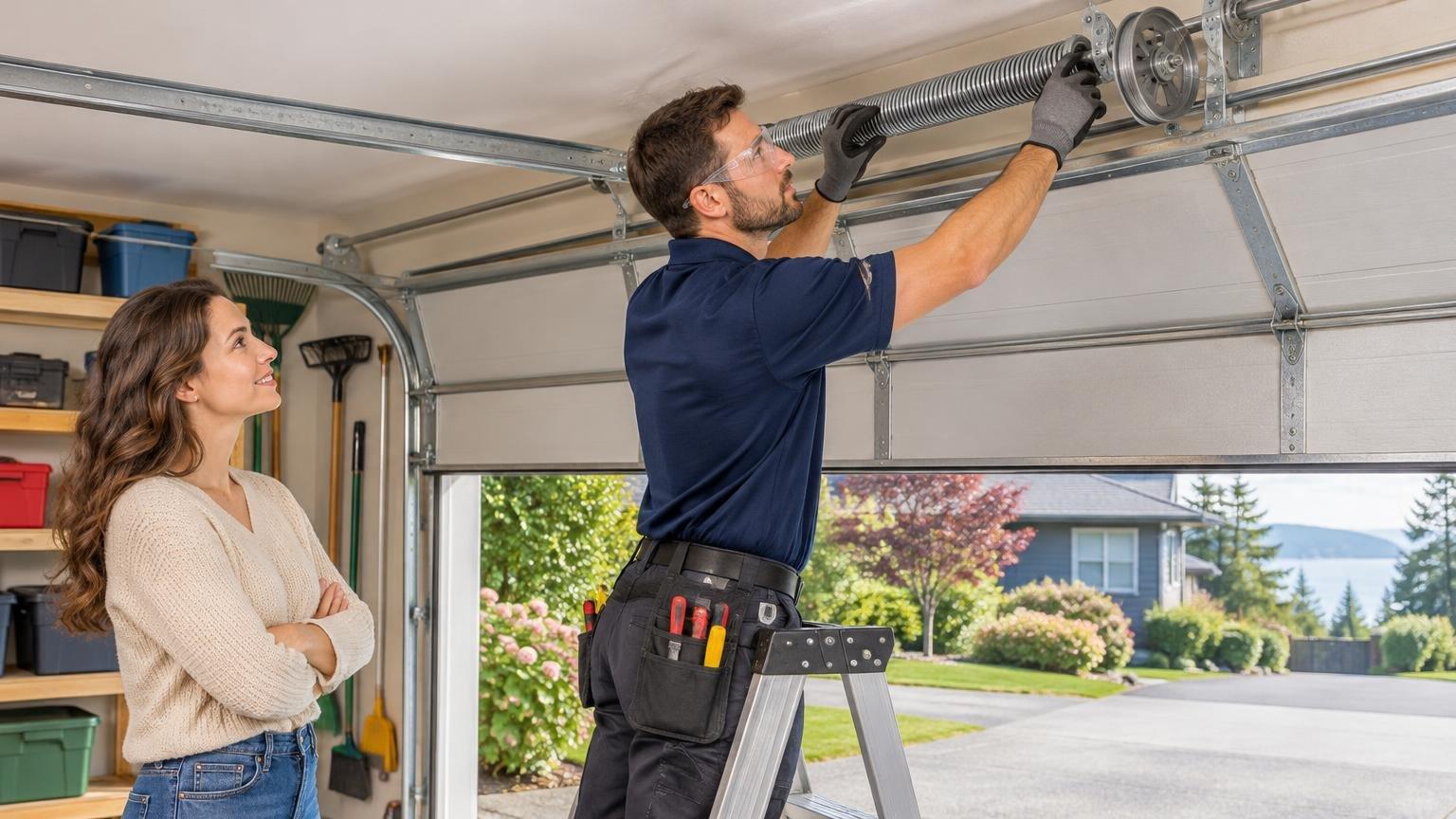
A garage door travel adjustment in Ladysmith should never involve springs, cables, or bottom brackets. These parts carry significant tension and can be dangerous to handle. If your door looks crooked, binds, feels heavy, makes unusual noise, or is difficult to move manually, we recommend stopping use and having a technician inspect it.
Know When an Opener Problem Runs Deeper
Travel settings that repeatedly shift or fail to hold can point to a larger mechanical or electrical problem. Worn gears, damaged belts or chains, faulty limit switches, weak springs, bent tracks, and deteriorated rollers may all affect how the opener performs.
Some signs should not be ignored:
- The door slams shut or will not stay closed
- The opener reverses unpredictably
- Grinding, scraping, or loud straining sounds occur
- Cables, springs, tracks, or rollers show visible damage
A trained technician can inspect the complete system rather than focusing on one setting alone. We check how the opener, door, tracks, rollers, springs, and safety features work together, then identify what is actually causing the problem.
Prepare Your Door for Wetter Fall Conditions
Preventive opener service can help reduce surprise breakdowns when rain and cooler temperatures put extra demands on garage doors. Regular maintenance gives us a chance to check travel limits, inspect safety sensors, lubricate moving parts, tighten hardware, and spot worn components before they lead to a more urgent repair.
For Ladysmith homes and businesses, a smooth-running garage door starts with a door that is balanced, aligned, and properly supported by its opener. Accurate settings matter, but they work best when the entire system is in good condition.
Restore Reliable Door Operation
If your garage door is stopping short, reversing unexpectedly, or putting strain on the opener, Garage Door Doctor Canada can help identify the cause. Our garage door travel adjustment in Ladysmith service addresses settings alongside the mechanical issues that can affect performance. Contact us to arrange a professional assessment and keep your door operating safely.