A commercial overhead door that sticks, rattles, moves slowly, or stops without warning can interrupt far more than traffic through a doorway. It can delay deliveries, limit staff access, leave inventory exposed, and create frustrating customer service problems.
When something goes wrong, it is tempting to ask whether your in-house team can handle it. We recommend starting with the door's role in your daily operations, then weighing safety, repair difficulty, staff training, liability, downtime, and Nanaimo's changing weather conditions.
Protect Daily Operations Before a Small Fault Grows
Commercial doors work hard. Loading bays, warehouses, storage areas, service shops, and other facilities may depend on them throughout the day. A minor sound or slow movement can be an early sign that a larger problem is developing.
Unplanned downtime can affect more than one department at once. While a door is out of service, you may be dealing with delayed shipments, blocked equipment, security concerns, or unsafe workarounds. We often find that the visible problem is only part of the issue.
Before assigning an in-house repair, consider what happens if the door becomes fully inoperable. The right decision depends on whether your team can safely manage the issue without increasing the risk to people, property, or daily operations.
Know Which Routine Tasks Your Team Can Handle
Your staff can play a useful role in day-to-day commercial door care without taking on mechanical repairs. Basic observation and housekeeping help spot trouble early and give a technician clearer information if service is needed.
Trained team members may safely handle simple tasks such as:
- Looking for visible damage, loose debris, or obstructions around the opening
- Keeping tracks and the area around the door clear of dirt, pallets, and stored materials
- Checking that photo-eye sensors appear clear and unobstructed
- Reporting grinding, squealing, banging, or other unusual operating sounds
Manufacturer instructions should guide any regular care your team performs. Proper lockout procedures also matter whenever a door is not safe to operate. Keeping notes about recurring noises, intermittent failures, or times when the door struggles can help us assess the problem more efficiently.
Housekeeping is not the same as repair work. Springs, cables, drums, rollers, tracks, and opener components can carry serious force or involve electrical parts. We recommend leaving adjustments and repairs to trained commercial door technicians.
Recognise When Professional Repair Is Needed
Certain warning signs should move a repair out of the in-house category right away. A commercial overhead door repair in Nanaimo may be needed when the door does not close fully, opens unevenly, reverses unexpectedly, or appears damaged after an impact.
Watch for issues such as:
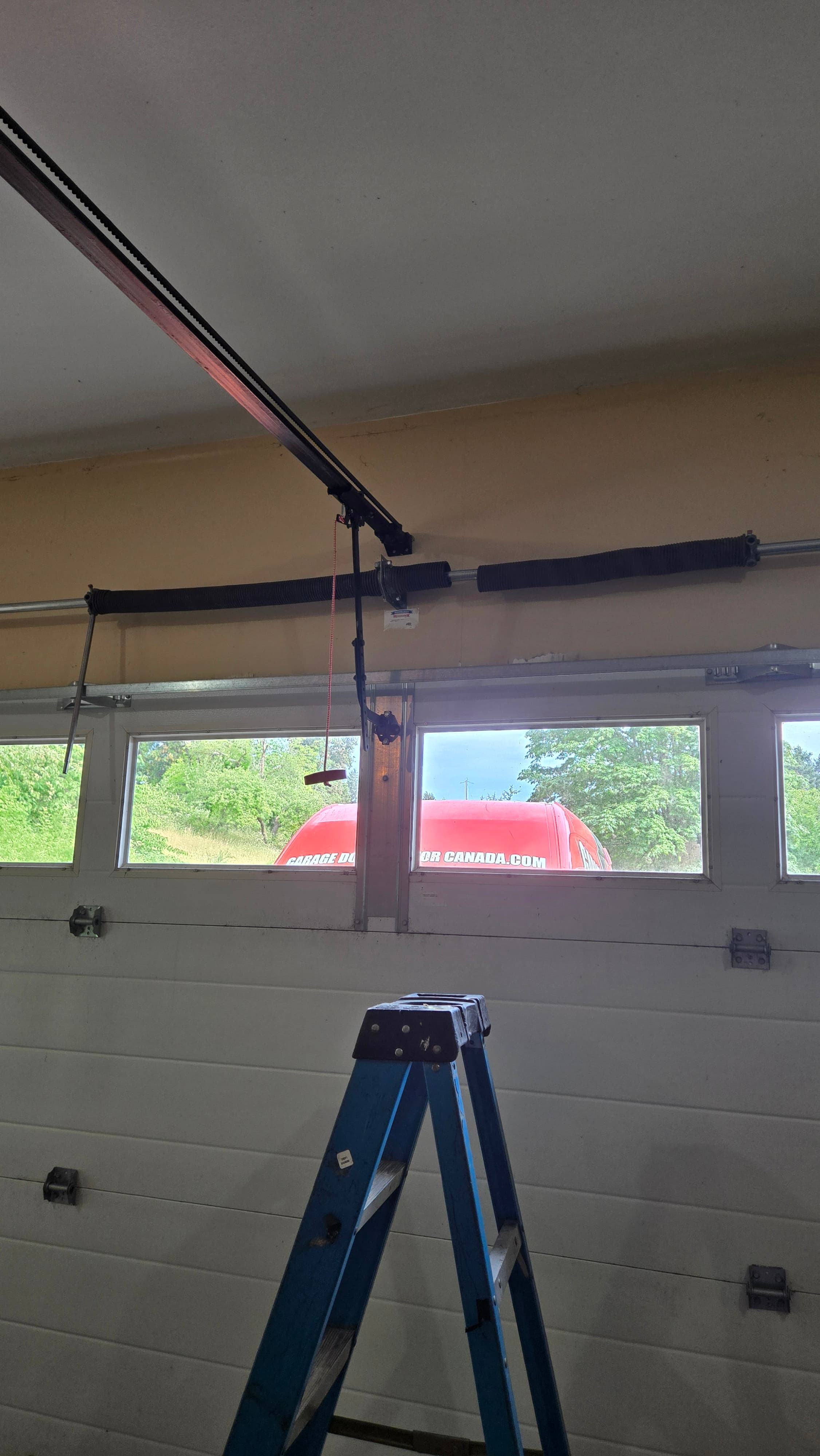
- Broken or loose springs and cables
- Bent tracks, damaged rollers, or panels that no longer align
- An operator that hums, stops, or reverses without completing a cycle
- A door that sags, binds, shakes, or will not stay in the correct position
- Damaged safety sensors or controls that do not respond as expected
High-tension components can cause serious injuries when handled improperly. Electrical systems, oversized doors, loading dock doors, and fire-rated doors can also present property and safety risks if repairs are attempted without the right knowledge and equipment.
A professional assessment goes beyond the obvious symptom. For example, a door that will not close may have a sensor issue, an alignment problem, worn parts, or a problem with the operator. Finding the underlying cause helps reduce repeat failures and longer shutdowns.
Compare Downtime, Financial Impact, and Liability
An in-house repair can seem like the fastest way to get a door moving again, especially during a busy shift. Yet an incorrect adjustment or temporary workaround can turn a manageable issue into a longer interruption, damaged equipment, or an unsafe door.
The financial impact of downtime may include delayed deliveries, inaccessible tools or inventory, lost work time, compromised building security, and disrupted service for customers. A door that is partly working is not always a safe door to keep using.
Liability also deserves careful thought. Workplace safety requirements, insurance conditions, manufacturer warranty terms, and internal safety policies may all affect who should perform repairs. Professional service records can also provide useful documentation for commercial properties when recurring problems or safety concerns need to be tracked.
Prepare Doors for Late Summer and Fall Weather
Late summer is a smart time to pay attention to commercial door performance. Dry dust can build up around busy openings, frequent cycling can expose worn parts, and seasonal traffic may place extra strain on doors that are already showing signs of trouble.
Before fall rain, wind, and cooler temperatures arrive in Nanaimo, we recommend arranging a preventative inspection if your door has been noisy, slow, or unreliable. Weather can reveal gaps, alignment problems, and operator issues that were less noticeable during drier conditions.
A professional inspection can look at the parts that affect safe daily use, including weather seals, rollers, tracks, safety sensors, operators, and door balance. Catching concerns before a busy period can help your facility avoid an emergency disruption.
Keep Repair Boundaries Clear
In-house teams can support safe commercial door operation by keeping openings clear, reporting changes, and following established safety procedures. Structural, mechanical, electrical, and high-tension repairs should remain with trained professionals.
Commercial properties may depend on overhead doors for access, security, shipping, and staff safety. When a door affects these areas, a proper assessment can help determine the safest path forward.
Restore Reliable Access for Your Business
At Garage Door Doctor Canada, we provide prompt, professional solutions tailored to your facility's needs. Explore our commercial overhead door repair in Nanaimo services to see how we can help keep your operations moving. For scheduling or questions, contact us today.