Rainy days, damp air, and cooler mornings can put a little extra strain on a garage door system. In Ladysmith, autumn weather often makes an older or worn garage door spring's problems easier to notice, especially when the door is used several times a day.
At Garage Door Doctor Canada, we have experience working with residential and commercial garage doors across Vancouver Island. We know that autumn weather does not always cause a spring to fail, but it can reveal wear that has been building quietly over time. Paying attention now can help you avoid a sudden door failure when you need reliable access most.
Why Autumn Weather Can Expose Spring Problems
Garage door springs carry much of the door's weight every time it opens and closes. The opener helps move the door, but the springs do the heavy lifting. When a spring begins to lose tension or wear down, the whole system has to work harder.
Wet weather can also affect exposed metal parts. Moisture may collect around springs, cables, brackets, tracks, and other hardware, particularly in garages with limited airflow. Surface rust can make metal parts less smooth and may speed up wear when it is left alone.
Cool mornings followed by milder afternoons can also reveal a system that is already struggling. Metal components expand and contract slightly as temperatures change. This is usually not a problem on its own, but it can make an old, corroded, poorly balanced, or tired spring show its age.
We often recommend watching for changes that appear when autumn rain and cooler temperatures arrive, such as:
- New squeaks, grinding, or banging sounds
- Slower door movement than usual
- An opener that sounds strained while lifting
- A door that looks uneven as it moves
- More effort needed to operate the door manually
A spring may have seemed fine through the summer, then become noisy or unreliable during wetter weather. If something feels different, it is better not to assume the issue will clear up on its own.
Signs Your Garage Door Spring May Be Failing
A garage door that suddenly feels very heavy is one of the clearest warning signs. If your opener struggles to lift the door, reverses unexpectedly, or seems louder than normal, it may be trying to compensate for a weak or broken spring. Openers are not made to lift the full weight of a garage door without spring support.
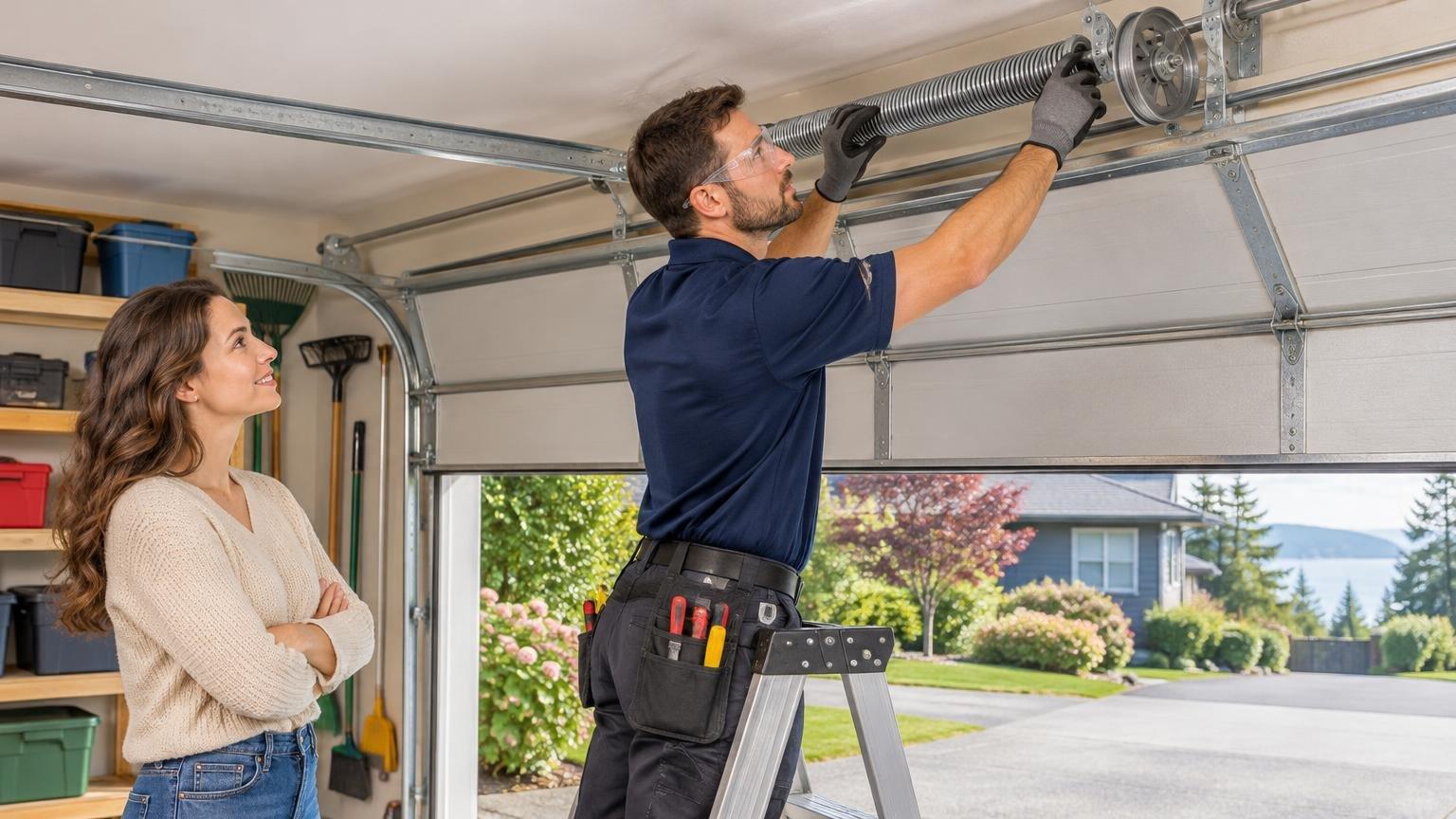
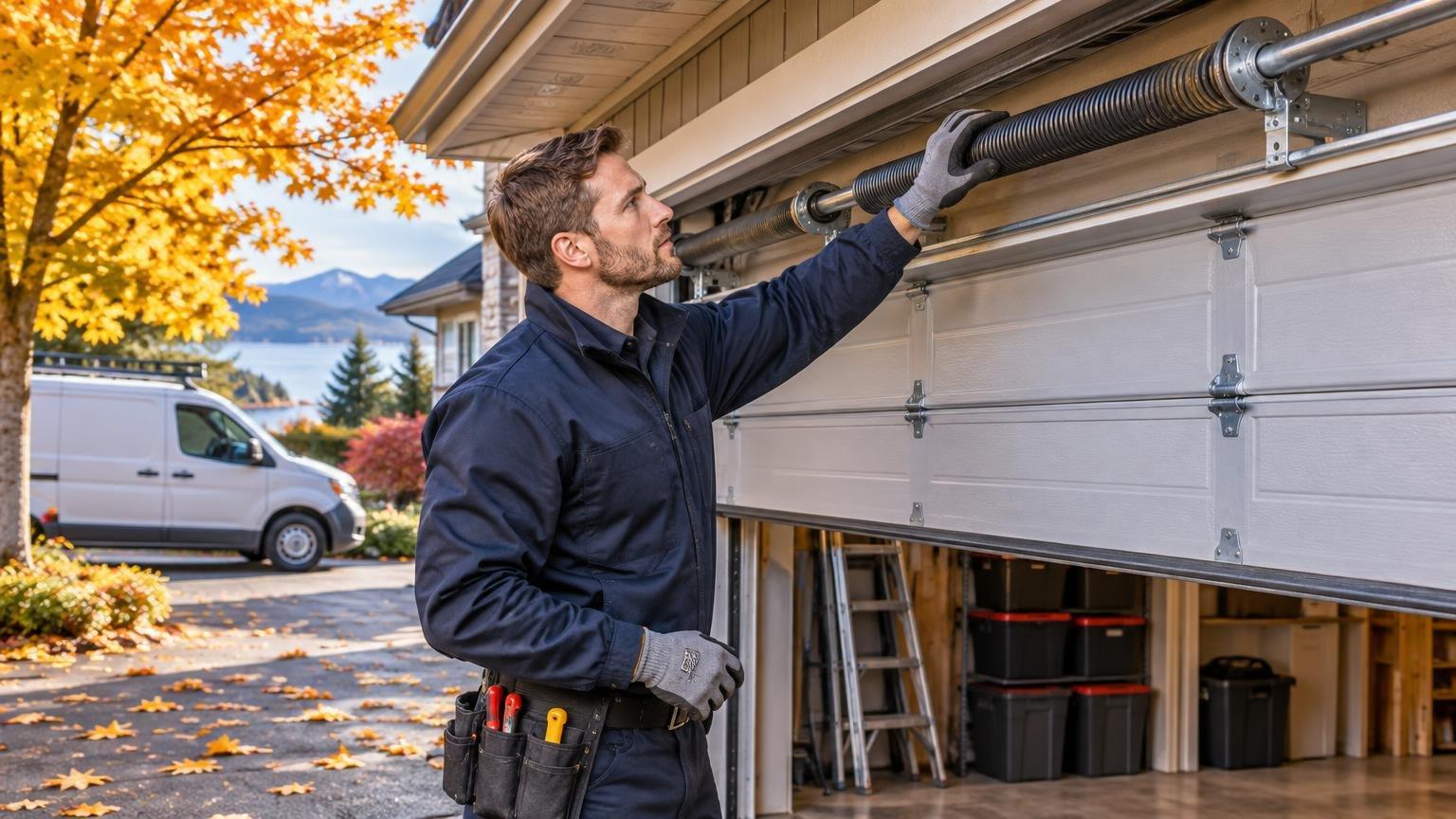
Visible wear can also point to a spring concern. Depending on the type of system, you may notice a gap in a torsion spring, stretched extension springs, loose coils, rust buildup, or damaged safety cables. These parts can be under significant tension, so we strongly recommend that you do not touch, adjust, or try to reconnect them.
Other operational changes deserve prompt attention. A door may move in a jerky way, stop after opening only a few inches, tilt to one side, or make loud squealing or grinding sounds. A sudden loud bang from inside the garage can mean a spring has broken.
When those signs appear, stop using the door if possible. Repeatedly running the opener can strain it further and may create more damage elsewhere in the system.
When Garage Door Spring Replacement in Ladysmith Is Due
Garage door spring replacement in Ladysmith may be needed when a spring has broken, lost its tension, become heavily corroded, or reached the end of its working life. A proper inspection matters because spring issues can look similar to problems with cables, drums, bearings, tracks, or the opener.
Our technicians examine the full door system rather than focusing only on the most visible damaged part. This helps us determine whether the spring is the main concern and whether nearby components have been affected by the added strain.
Many garage doors use two springs. When both springs are the same age and have worked under the same conditions, replacing only the broken one may not always be the best long-term approach. Matching springs can help the door maintain balanced lifting force and reduce the chance of another spring failure shortly after service.
Correct sizing, tensioning, and balancing are especially important. A properly matched spring supports smoother movement, helps protect the opener from unnecessary strain, and makes the door easier to operate through changing weather.
Why Spring Repairs Should Never Be a DIY Job
When a garage door will not open, it is understandable to want a quick fix. Still, spring repairs are not a safe DIY task. Torsion springs are tightly wound, while extension springs are stretched under heavy tension. An incorrect adjustment, loose bracket, or makeshift tool can lead to serious injury or property damage.
Forcing a heavy door open by hand can also create new problems. The door may drop suddenly, slip out of its tracks, damage its panels, or place extra stress on the cables and opener.
If you suspect a spring problem, we recommend these safer steps:
- Keep children, pets, employees, and vehicles away from the door
- Do not stand or park beneath a door that appears uneven
- Avoid removing brackets, cables, or spring hardware
- Do not keep pressing the opener when the door struggles to move
- Leave the door alone if it is unstable, stuck, or making loud noises
If a damaged door is stuck open or preventing secure access to your home or business, urgent professional support can help protect the property while the problem is assessed.
A Safer Approach to Autumn Garage Door Care
Autumn garage door symptoms are worth taking seriously, even when the door still opens and closes. Rust, strange noises, heavier movement, uneven lifting, and opener strain can all point to a spring that needs attention before it fails completely.
At Garage Door Doctor Canada, we provide spring service, maintenance, repairs, and emergency support for homes and businesses in Ladysmith, Nanaimo, Duncan, Mill Bay, and surrounding Vancouver Island communities. With the right tools and experience, we can assess the door safely and help restore dependable operation when seasonal weather brings existing problems to the surface.
Restore Safe, Reliable Door Operation
If your garage door is struggling to open, making unusual noises, or sitting unevenly, we can help identify the issue before it worsens. Explore our garage door spring replacement in Ladysmith service to understand your options. At Garage Door Doctor Canada, we provide clear recommendations and professional service tailored to your door's needs. To arrange an assessment, please contact us.