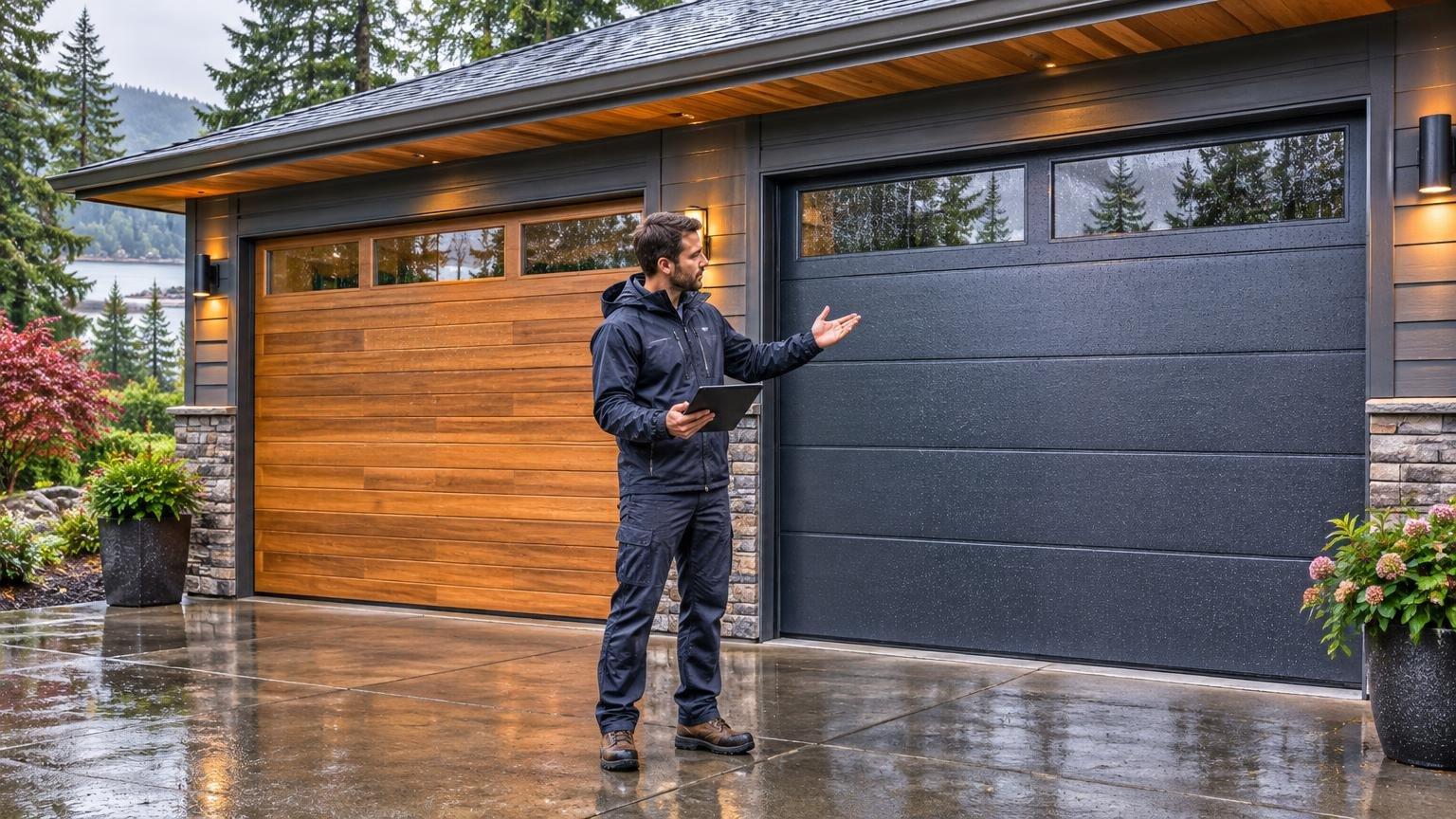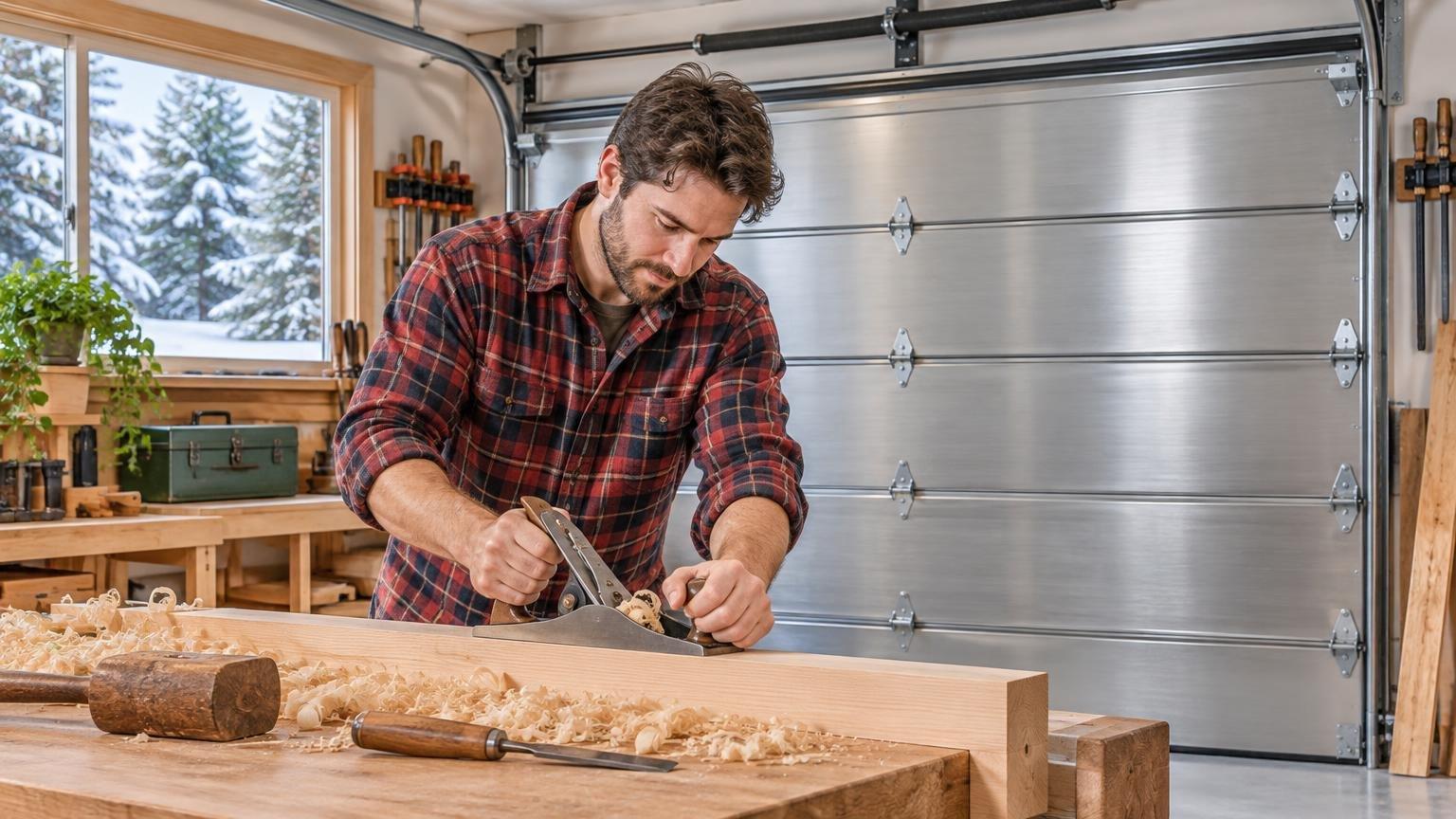
A steel-backed garage door can make a real difference in a Mill Bay workshop once autumn rain and cooler air settle in. For those of us who use detached garages for projects, storage, workouts, or vehicle work, a cold door can make the entire space feel harder to use.
November often brings damp coastal air, wind, and frequent rain across Vancouver Island. Because the garage door is usually the largest moving exterior surface in the building, poor insulation, worn weather seals, or damaged panels can allow cold air and moisture to affect the whole workshop.
Comfort Begins at the Workshop Door
When a garage door has little insulation, heat can move through it more easily. Even a heater working away in the corner may struggle to keep up if cold air is entering around the door panels or along the floor.
We often find that workshop comfort comes down to more than the heating system. The garage door, its seals, and its fit in the opening all play a part. A steel-backed garage door in Mill Bay gives you a practical option if you want a stronger barrier between your workspace and wet winter weather.
Steel-backed doors are built for regular use while helping create a more finished interior surface. That can be helpful in workshops where you spend time on projects, keep valuable tools, or store materials that do not like changing temperatures.
How Steel-Back Insulation Handles Wet Weather
A steel-backed garage door generally has an insulated core protected by steel on both the exterior and interior sides. This layered construction helps reduce heat transfer through the door and gives the insulated material added protection.
For a regularly heated workshop, a better-insulated door can help indoor temperatures stay more consistent. That does not turn a garage into a fully climate-controlled room on its own, but it can reduce the cold, drafty feeling that makes winter projects less pleasant.
When comparing door options, we recommend thinking about how you actually use the space. Insulation needs can vary depending on whether your garage is mainly for storage or used every day.
- A lightly used storage garage may need a simpler insulation level.
- A heated workshop may benefit from a higher R-value door.
- Spaces holding paints, lumber, tools, or other sensitive materials may need steadier conditions.
- A home gym or hobby room may be more comfortable with reduced drafts.
R-value is a way to compare insulation levels. In simple terms, a higher R-value means the door offers more resistance to heat moving through it. We can help you weigh that rating against the building, the door opening, and how often you use the workshop.
Installation matters just as much as the door itself. Proper panel fit, track alignment, weatherstripping, and bottom-seal contact all affect how well the door performs when rain and cold air arrive.
Keep Heat in and Moisture Out
Insulation helps, but gaps around the door can still let cold air sneak inside. Ageing weatherstripping, a worn bottom seal, bent panels, and an uneven door can all create openings that make a workshop feel damp and uncomfortable.
Reducing air leaks may help your space hold heat longer and can lessen the strain on portable or permanent heaters. It can also make the room feel more even from one side to the other, especially near the garage door.
Moisture deserves attention in Mill Bay workshops. Damp conditions can affect tools, vehicles, lumber, stored belongings, and electrical equipment. A well-fitted steel-backed door can support a drier, more stable indoor environment, especially when paired with suitable ventilation and moisture control for the building.
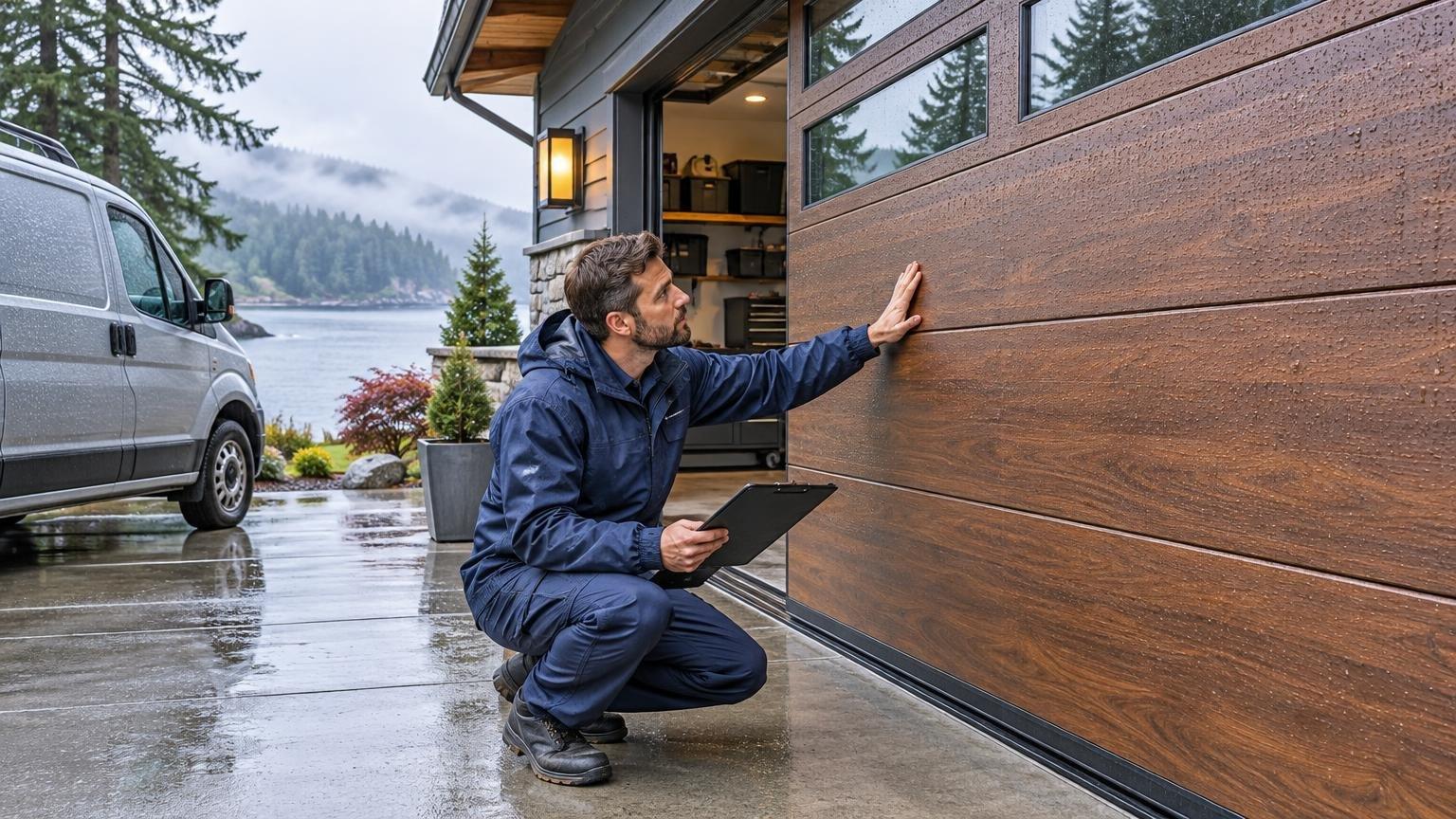
Still, insulation is not a complete answer to every humidity concern. We recommend having the door and its surrounding seals inspected after heavy rain or stormy weather. Pay attention to:
- Cracked, flattened, or missing weatherstripping
- Gaps beneath the bottom seal
- Water marks near the door opening
- Rusted hardware or damp items close to the door
- A door that no longer sits evenly when closed
Our technicians can assess whether cold air or water is entering through the door itself, worn seals, damaged panels, or gaps caused by an improperly balanced door.
Match the Door to Workshop Use and Hardware
The right door should suit the way you use the workshop, not just the size of the opening. Before choosing a replacement, we look at door dimensions, desired insulation, frequency of operation, window placement, exterior appearance, and whether the garage is attached to the home or separate from it.
Steel-backed doors can be a durable choice for busy spaces where the door opens often for vehicles, equipment, deliveries, or daily projects. The steel interior helps protect the insulated core and gives the inside of the garage a clean, finished look.
A heavier insulated door also needs the correct hardware. Springs, tracks, rollers, cables, and the opener must be suited to the door's weight and operation. An older opener or worn spring system may struggle if it was not designed for a new insulated door.
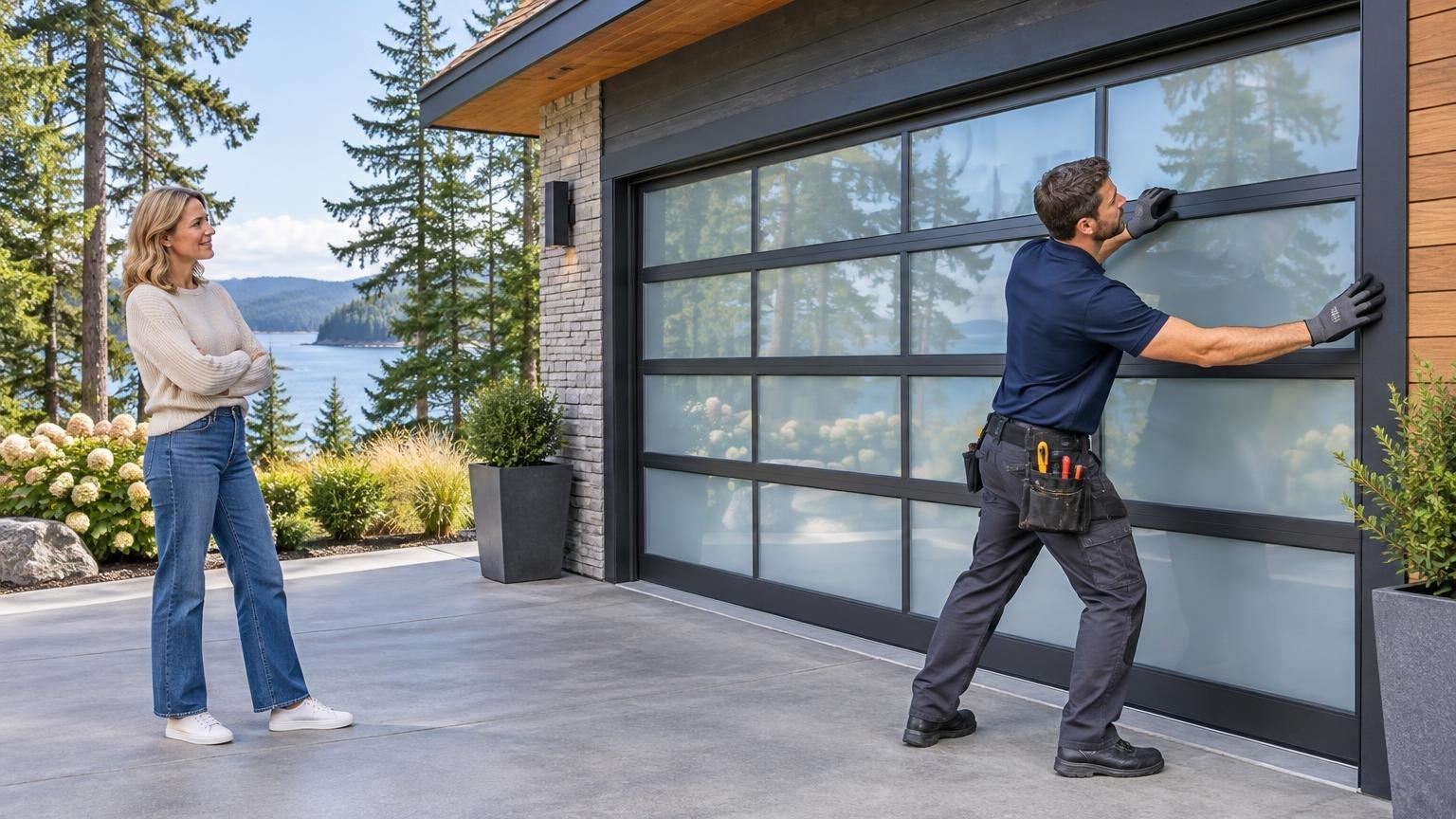
Before installation, we recommend a professional assessment of the complete system. At Garage Door Doctor Canada, we can help determine whether the existing hardware can support the new door or whether related parts need attention for safe, smooth operation.
Protect Winter Access with Service and Safety Checks
A steel-backed door works best when its moving parts are kept in good condition. Cold temperatures, moisture, and frequent operation can expose problems with springs, rollers, hinges, cables, and opener settings.
Seasonal service can include checking door balance, lubricating appropriate moving components, inspecting weather seals, testing the auto-reverse feature, and making sure the opener runs smoothly. A balanced door puts less strain on the opener and is less likely to develop uneven movement.
Do not ignore loud grinding, slow travel, a crooked door, floor gaps, frayed cables, broken springs, or an opener that runs without moving the door. These issues can affect comfort, security, and safe access to your workshop. For urgent breakdowns that leave a garage exposed to rain or cold air, we provide 24/7 emergency repair service across Vancouver Island.
Prepare Your Workshop Before the Next Cold Snap
A steel-backed garage door can be a worthwhile upgrade when you want a warmer, more dependable workshop through Mill Bay's wet season. It can help reduce drafts, support steadier temperatures, and provide stronger protection for the tools and items kept inside.
Before winter weather becomes more severe, it helps to assess the condition of your current door, seals, springs, and opener. A professional inspection can show whether a door upgrade, seal replacement, spring service, opener repair, or complete replacement is the most sensible way to improve comfort and reliable access.
Keep Your Workshop Comfortable All Winter
Garage Door Doctor Canada can help you choose and install a steel-backed garage door in Mill Bay that supports a warmer, more dependable workspace. Our team can recommend practical options based on your workshop's needs and daily use. Contact us to arrange service or discuss your next garage door project.