Make Your Duncan Garage More Comfortable This Fall
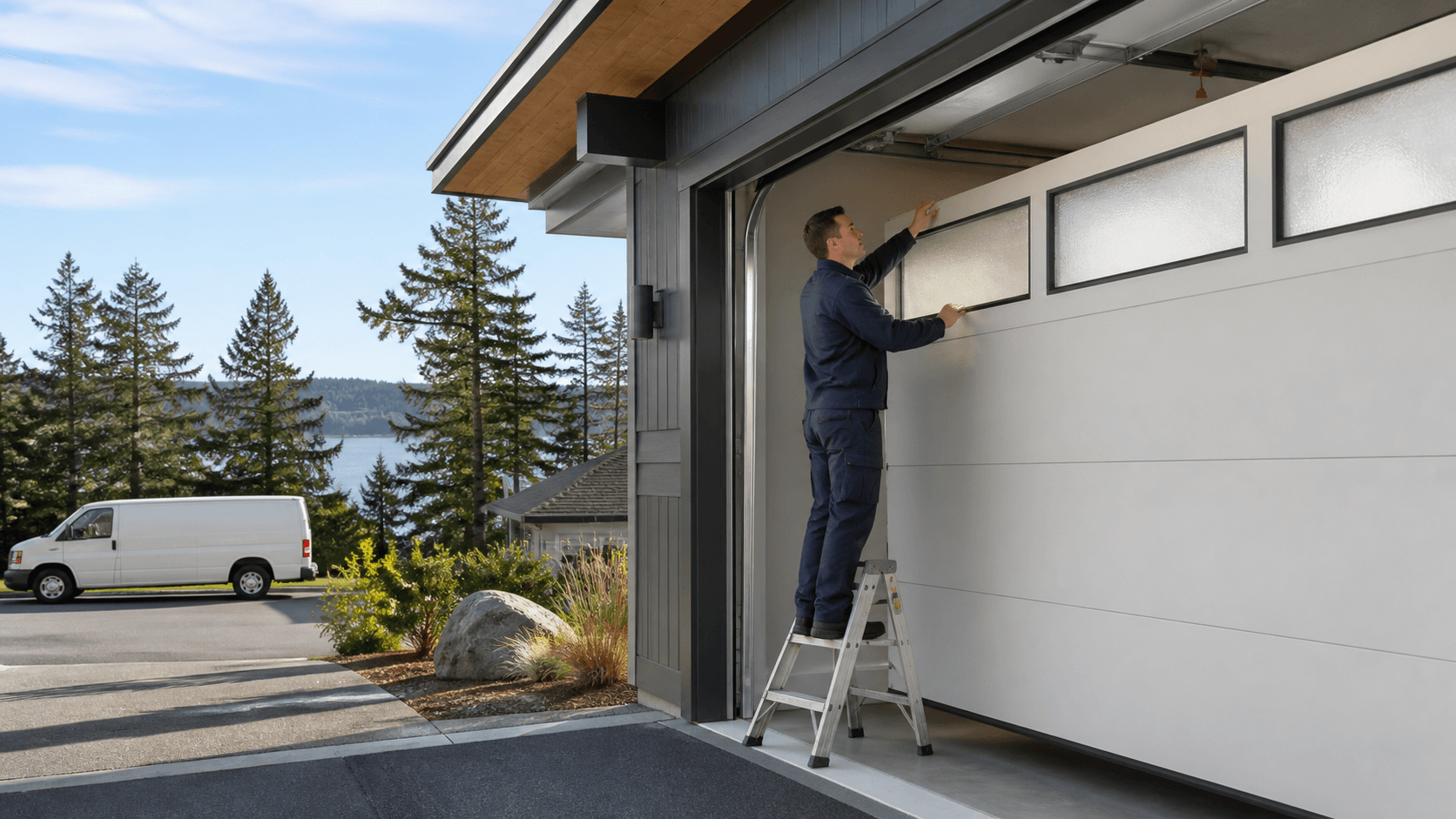
Choosing between an insulated and standard garage door can affect how your garage feels, sounds, and performs through changing Duncan weather. As cooler mornings and heavier rain return in the fall, the garage door becomes more than a place to park the car. It is one of the largest moving exterior surfaces on your home, and its construction can influence the space behind it.
At Garage Door Doctor Canada, we often help homeowners compare doors for attached garages, workshops, storage areas, and garages with living space nearby. The right choice depends on how you use the space, the condition of the opening, and what matters most to you, from quieter operation to steadier temperatures and long-term durability.
How Insulated Garage Door Installation in Duncan Improves Comfort
Insulated garage doors are built with exterior layers of steel, vinyl, or similar materials around an insulating core. That core is commonly made from polystyrene or polyurethane. Together, these layers slow the movement of heat between the garage and the outdoor air, helping the space feel less affected by cool, damp weather.
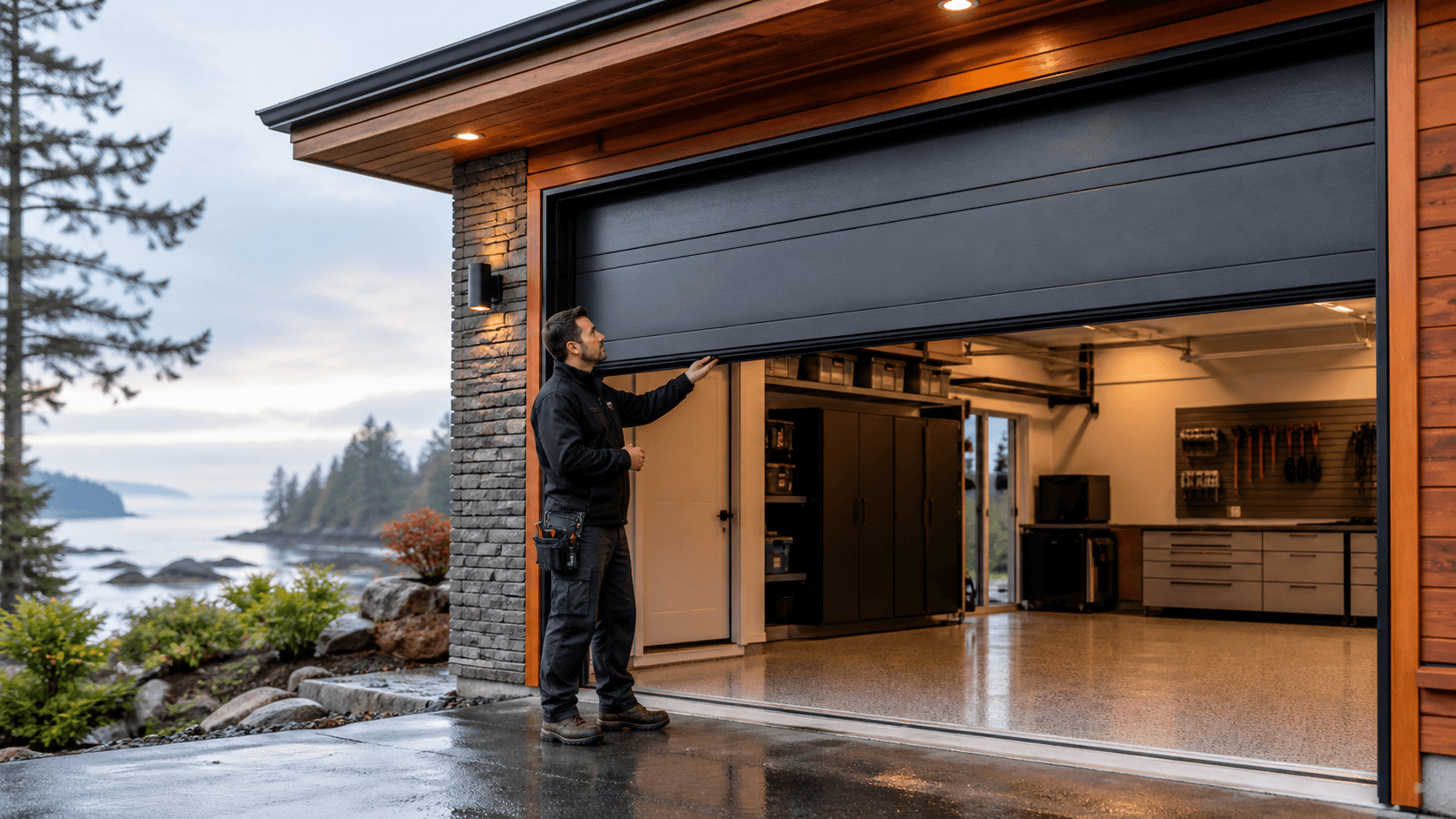
Insulated garage door installation in Duncan can make particular sense for an attached garage. When the garage shares a wall, ceiling, entry door, or floor with the rest of your home, outdoor temperature swings may be felt in nearby rooms. This can be especially noticeable when there is a bedroom above the garage or a utility room beside it.
A layered door can also make daily use more pleasant by softening some outside sound. It will not make the garage silent, but rain on the door, street traffic, and neighbourhood activity may be less noticeable than with a thin single-layer door. For the best result, we also look at the full system, including door alignment, weatherstripping, tracks, and opener condition.
An insulated door may be a good fit if your garage is used for:
- A workshop, hobby area, or home gym
- Regular storage for items affected by temperature swings
- Pet space or frequent family activities
- A garage with a room above or beside it
Standard Doors Meet Straightforward Garage Needs
Standard garage doors are generally made from a single layer of steel, aluminum, wood, or another door material without an insulating core. They remain a practical choice when the garage is detached, used mainly for vehicle parking, or rarely used as an active living or work space.
For a simple replacement, a standard door can provide reliable operation without adding layers that may not match the way you use the garage. We do not believe every Duncan home needs maximum insulation. A detached storage garage, for example, may be well served by a standard door with dependable hardware and proper seals.
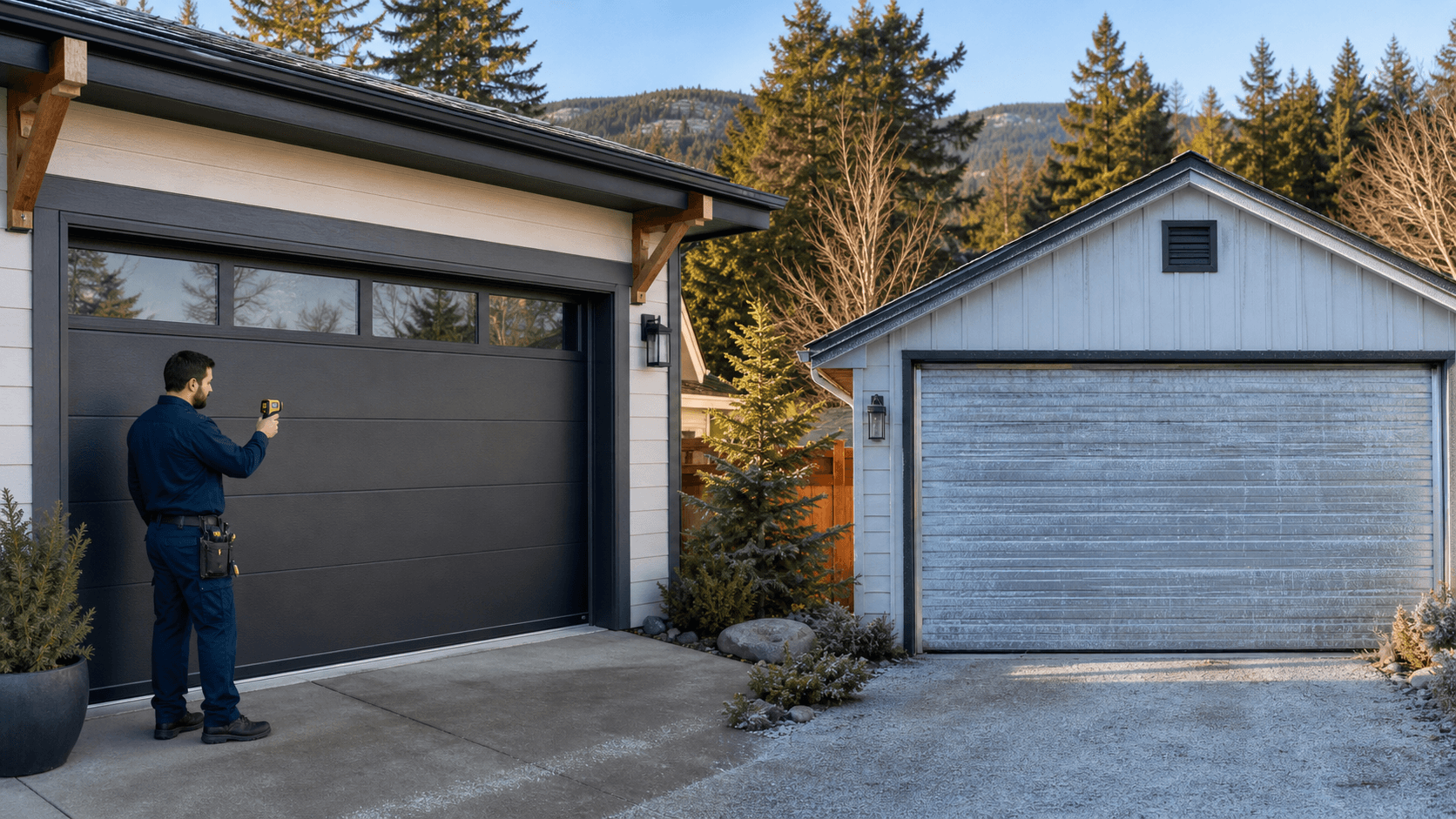
There are tradeoffs to keep in mind. A single-layer door will usually respond more quickly to outdoor temperatures, and rain or wind noise may be easier to hear inside. It can also feel lighter during operation than an insulated door. In Vancouver Island's wet conditions, even a basic door benefits from corrosion-resistant hardware, sound weather seals, and routine professional maintenance.
Before selecting a door, we recommend thinking about how the garage may be used in the years ahead. A space that is only used for storage today could later become a workshop, project area, or more frequently used part of the home.
Look Beyond R Value When Comparing Doors
R value measures resistance to heat flow. In general, a higher R value means the door offers more resistance to temperature transfer. It is a useful comparison point, but it should not be the only feature you consider.
The complete construction of the door matters just as much. Strong panels, reinforced sections, durable hinges, reliable rollers, and properly fitted weather seals all affect how the system performs over time. The garage framing, threshold, tracks, and condition of the opening matter too. Even a well-built insulated door can lose some of its benefit if gaps allow cool air and wind-driven rain inside.
When comparing insulation types, we help you understand the differences:
- Polystyrene can offer a balanced option for insulation and door construction.
- Polyurethane is commonly injected between door layers for a dense, rigid panel.
- Steel door layers can add strength and a more solid feel during operation.
- Proper weatherstripping helps protect the edges of the garage opening.
Professional measuring and installation are particularly important before the wetter fall and winter months. A door that fits and seals correctly supports smoother movement, better protection from the elements, and a more comfortable garage.
When an Insulated Door Delivers Better Value
An insulated door is often a stronger choice when the garage is connected to the home or used throughout the year. If you spend time working on projects, exercising, storing household items, or caring for pets in the garage, reduced temperature swings and lower noise levels can make a noticeable difference.
Many Duncan homes also have living areas above or beside the garage. In those situations, an insulated door can help make the garage less affected by outdoor conditions, which may support more consistent comfort in nearby spaces. Insulated panels may also feel sturdier during regular opening and closing.
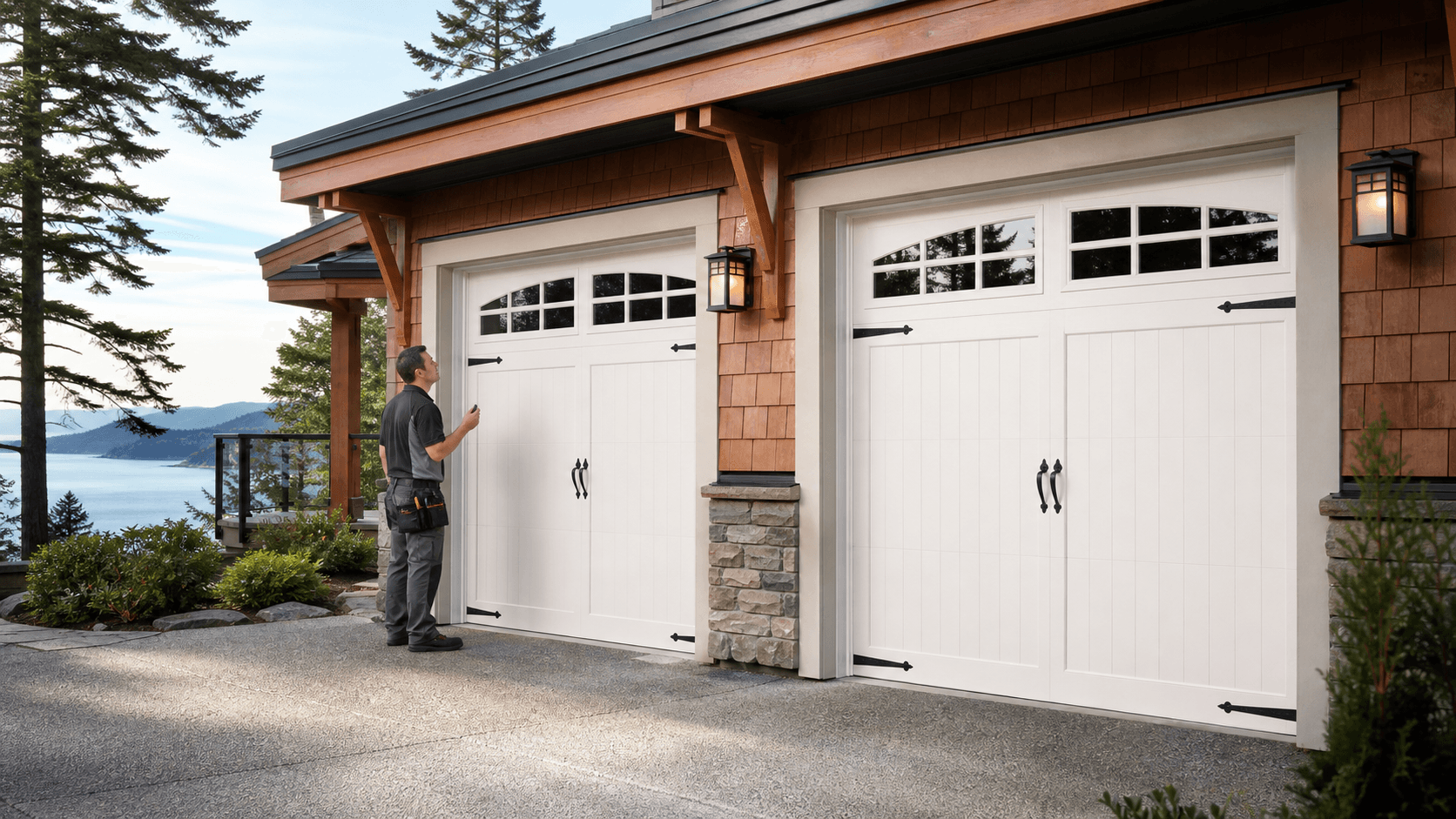
Appearance matters as well. We can help you compare modern flush-panel doors, traditional raised panels, carriage-house styles, window options, decorative hardware, and durable finishes. The best door should suit your home while meeting your practical needs for security, insulation, maintenance, and daily use.
Assess Your Garage Before Wet Weather Settles In
Standard doors can be a sensible solution for simple detached garages, while insulated doors are often better suited to attached garages and frequently used spaces. The decision becomes clearer when we look at your garage's layout, how you use it, the condition of the existing door, and whether the surrounding areas of the home are affected by garage temperatures.
Before fall rain becomes more persistent, it is wise to address worn weather seals, noisy operation, damaged panels, aging springs, or an opener that is no longer running smoothly. At Garage Door Doctor Canada, we provide guidance on new door selection, insulated door installation, opener service, weather seal upgrades, repairs, and spring replacement for Duncan homes and businesses.
Improve Comfort And Efficiency This Season
Garage Door Doctor Canada can help you choose a door that supports better insulation, dependable performance, and a finished look that suits your property. Explore our insulated garage door installation in Duncan services to discuss options for your home or business. When you are ready to get started, contact us to arrange a consultation.