Keep a Corroded Bracket From Causing a Door Failure
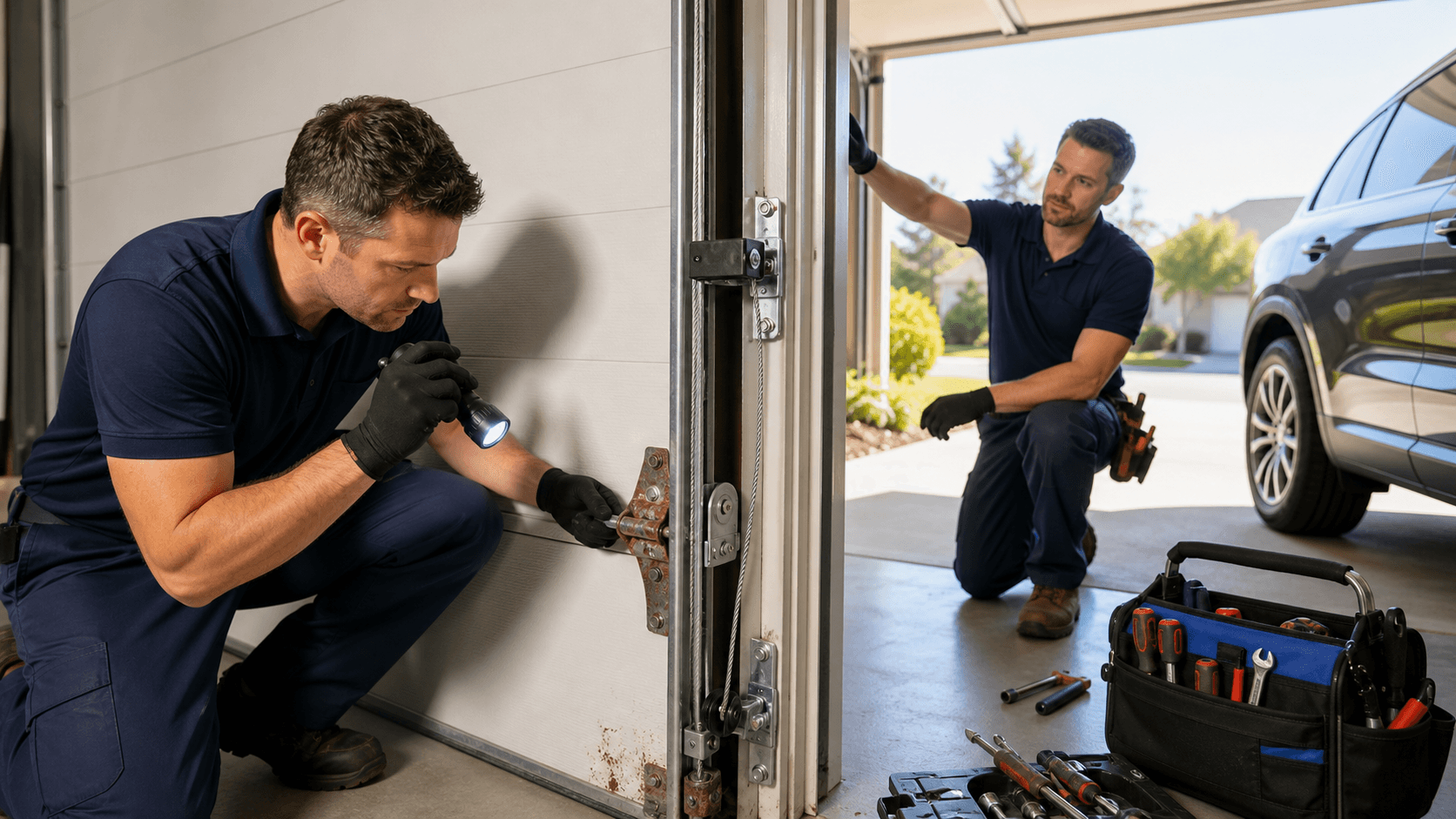
Bottom brackets are small parts, but they do a big job. Located at the lower corners of your garage door, they help hold the lifting cables that work with the spring system to raise and lower the door. Because those cables carry strong tension, a weak or damaged bracket can create a serious safety concern.
Here in Duncan, wet autumn weather can be hard on garage door hardware. Coastal moisture, frequent rain, and changing temperatures can allow rust to form around the door's lower edges. We often find that corrosion starts slowly, while the door still seems to open and close normally. By the time the damage is easy to spot, the metal may already be weakened.
Why Duncan's Wet Autumn Speeds up Bracket Corrosion
Rainwater, damp air, road grit, and moisture brought into the garage can gather near the bottom of the door. That area contains brackets, cables, fasteners, rollers, and weatherstripping, so it is often exposed to more moisture than the rest of the system.
Rust can develop faster when protective paint or coating has chipped away. Older doors and doors exposed to wind-driven rain may be especially prone to this problem. Once corrosion begins, it can spread beneath a coating and weaken the bracket plate or the bolts that hold it in place.
Common sources of moisture around bottom brackets include:
- Rain blowing under worn or damaged weatherstripping
- Wet vehicles parked inside the garage
- Leaves, dirt, and grit collecting along the threshold
- Damp air settling in an unheated or poorly ventilated garage
Garage door bracket repair in Duncan is best addressed when rust first appears, rather than waiting for a cable or bracket to fail. We recommend professional attention when you notice deterioration around the lower corners, cable wear, or loose-looking hardware.
Spot Bottom Bracket Damage Before It Causes Injury
A bottom bracket can rust for a long time without making much noise. That is why a visual check of the lower corners of the door can be helpful, especially before wetter weather settles in. You do not need to touch, tighten, or test the hardware to notice signs that something is wrong.
Warning signs we recommend taking seriously include:
- Orange rust, flaking metal, or rust stains near the bottom corners
- Cracked bracket plates, bent hardware, or missing bolts
- A cable that looks loose, frayed, or out of place
- A door that sits unevenly when closed
- Jerking movement, sharp scraping sounds, or rough travel
Operating problems can point to more than one worn component, but the bottom bracket and cable area should never be ignored. If one lifting cable slips loose, the door may tilt, jam in the track, or drop unevenly. This can damage the door, opener, tracks, or items stored nearby. More importantly, an unstable door can create a risk of injury.
If the cable has slipped, the bracket is visibly damaged, or the door appears unstable, stop using the door. We advise keeping people clear of the area and leaving the door in its current position until a trained technician can inspect it safely.
Never Loosen a Bottom Bracket Under Spring Tension
Bottom brackets connect directly to lift cables, and those cables remain under extreme tension when the garage door is closed. Removing a bracket bolt may seem like a simple repair, but it can release stored force without warning. This is not a part of the door system that should be adjusted or removed by a homeowner.
We also caution against trying to reattach a loose cable, adding makeshift fasteners, or covering corrosion with a temporary fix. A bracket that has weakened from rust may not hold properly even if it looks secure for a short time. Improper hardware can also interfere with the cable path and make the door move unpredictably.
Even experienced DIY homeowners should leave bracket, cable, and spring work to trained garage door technicians. Proper service requires the right tools, a careful inspection of the full lifting system, and safe procedures for managing spring tension.
Garage Door Bracket Repair in Duncan Restores Safety
A professional repair should look beyond the visibly rusted part. When we inspect a garage door, we check the bottom brackets along with cables, rollers, tracks, springs, fasteners, and the door's overall balance. Wear in one area can place extra strain on another, so replacing only one piece without checking related parts may leave a problem behind.
Depending on what we find, repairs may include replacing corroded brackets, worn lift cables, damaged fasteners, or other components affecting safe operation. Once the needed work is complete, the door should be tested for smooth, even movement.
Garage door bracket repair in Duncan should include a full safety check, not simply a quick swap of the bracket you can see. This helps us identify cable damage, loose hardware, uneven movement, and other issues before they become a larger door failure.
Prepare Bottom Brackets for Wet Autumn Weather
Before prolonged autumn rain adds more moisture to your garage, take a close look at the lower corners of the door from a safe distance. Rust, cable damage, loose hardware, and uneven door movement can indicate that the door should not be operated until it has been assessed safely. Early attention can help prevent a corroded bracket from turning into a sudden cable or door failure.
Seasonal cleaning around the threshold can help reduce the buildup of leaves, grit, and standing moisture near the bottom brackets. Keeping weatherstripping in good condition and avoiding contact with bracket bolts or lift cables also helps protect this high-tension area of the door system.
Restore Safe, Reliable Door Operation
If you notice a loose bracket, unusual movement, or uneven door travel, Garage Door Doctor Canada can assess the issue and recommend the right repair. Our garage door bracket repair in Duncan service helps address hardware concerns before they affect the rest of the system. To arrange an inspection, please contact us for assistance.